There are stories that cannot be found in archival documents. They live in the memories of those who have spent a lifetime among looms, in the hands that have learned an ancient craft, in the emotions preserved by those who have contributed, day after day, to creating our textiles.
For this reason, we have chosen to collect, in the Archive section, the testimonies of the women who have been part of the history of the Tessitura Luigi Bevilacqua. Their words have reached us through direct interviews, carefully preserved, because they represent a heritage as precious as the textiles themselves.
This is not an exercise in nostalgia. It is our archive in its most authentic expression. Every velvet that we preserve, catalogue, and pass down today exists because, at one time, someone created it thread by thread, with patience, precision, and extraordinary expertise.

Photograph Depicting the Weavers Gina Valier and Annamaria Zandali With a Piece of the “Melograno” Lampas
The designs may be preserved in archives and the velvets stored away in drawers, but the time, dedication, effort, and pride belong to the memory of those who experienced them firsthand. Giving these people a voice means telling, in the sincerest way, what a handmade textile truly represents.
The stories of these women share a profound sense of belonging to Bevilacqua, born and nurtured among the looms. Many of them began working when they were very young, at just twelve years old. In the second half of the 1950s, for those who did not continue their studies, entering the workforce was a natural step in Italy. There were no employment agencies: often, it was the local priest who knew which companies were looking for workers, or it was simply a matter of word of mouth among relatives and friends.

Weaver Working With Yarns
They were still children. Their mothers accompanied them during their first days, staying by their side until they felt confident. Then came their colleagues, many of them the same age, with whom they shared work, breaks, laughter, and their first friendships. In this way, the Tessitura became almost a second family.
Their stories bring back intense years, marked by commitment and sacrifice, but also by serenity, pride in a finished piece of work, and the emotion of seeing their textiles destined for popes, queens, and important international commissions. Memories that speak of friendships lasting a lifetime and of women who dedicated decades of their journey to our Tessitura, knowing three generations of the Bevilacqua family: from Cesare to Giulio, up to the current President and CEO, Rodolfo and Alberto.
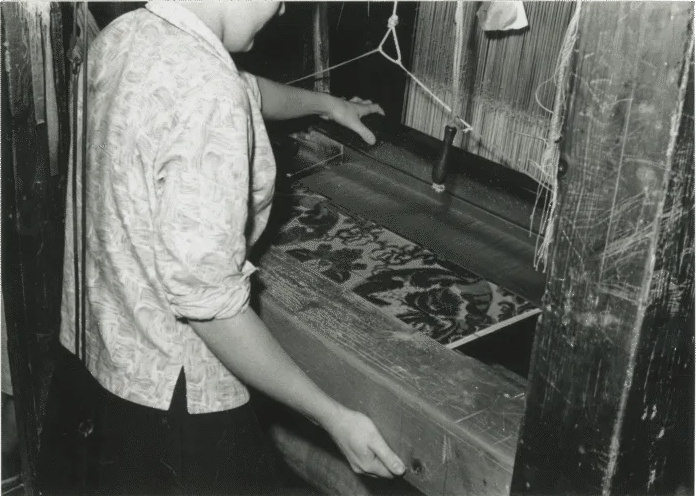
Photograph of a Weaver Working on the Creation of the “Fioroni” Soprarizzo Velvet
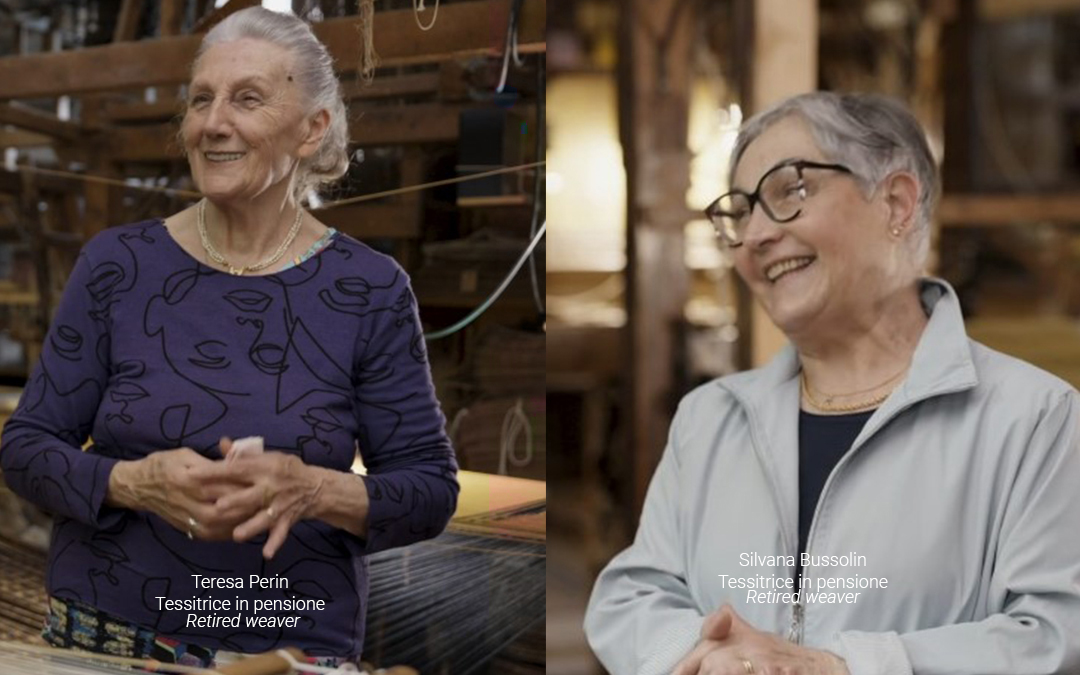
Let’s begin this journey with two of them: Silvana and Teresa.
Two different crafts, one shared story. One prepared the threads, the other transformed them into textiles. Together, they recount everyday life at the Bevilacqua weaving mill through memories of work, passion, and a deep sense of belonging.
Silvana Bussolin
“It was summertime, and when I went up to the offices, I was trembling like a leaf. I will always remember it… There were girls as young as I because, back in those days, at the end of the 1950s, people started working at twelve years old. Either you continued your studies, or you had to find a job. Here, I met eight girls my age: we are still friends today. It was the beginning of a great adventure.”
“I joined Bevilacqua accompanied by my mother and by a friend who already knew the work of the weaving mill. At that time, all liturgical vestments were made with Bevilacqua textiles.”
At the beginning of the 20th century, Tessitura Luigi Bevilacqua began a long and significant collaboration with the Church, creating textiles for sacred furnishings and liturgical vestments destined for churches, basilicas, convents, and the Vatican. This relationship led to the recognition of Bevilacqua as a Pontifical Supplier, granted in 1953 by Pope Pius XII and renewed in 1959 by Pope John XXIII.
Learn more: Velvets for Sacred Furnishings and Vestments

Photograph Taken During Cardinal Roncalli’s Visit to the Weaving Mill, Later Pope John XXIII
“You started by changing the bobbins. Then, as you grew and learned little by little, you would be ‘under a boss’ and truly begin the craft of weaving. The first tools, the first cut… your hands were trembling. There was a small blade, and you had to find the right groove, cut, and pull out the soprarizzo rod. Little by little, you learned. I think that by the age of seventeen or eighteen, I was already working at the loom.”
Soprarizzo velvet, one of the most precious textiles in the world, is created through an extraordinarily complex process that is still carried out today on 18th-century hand looms. Every millimeter requires precise gestures and a skill refined over years, passed down from one generation of weavers to the next.
Learn more: Soprarizzo or Cesellato: The Finest of Our Velvets
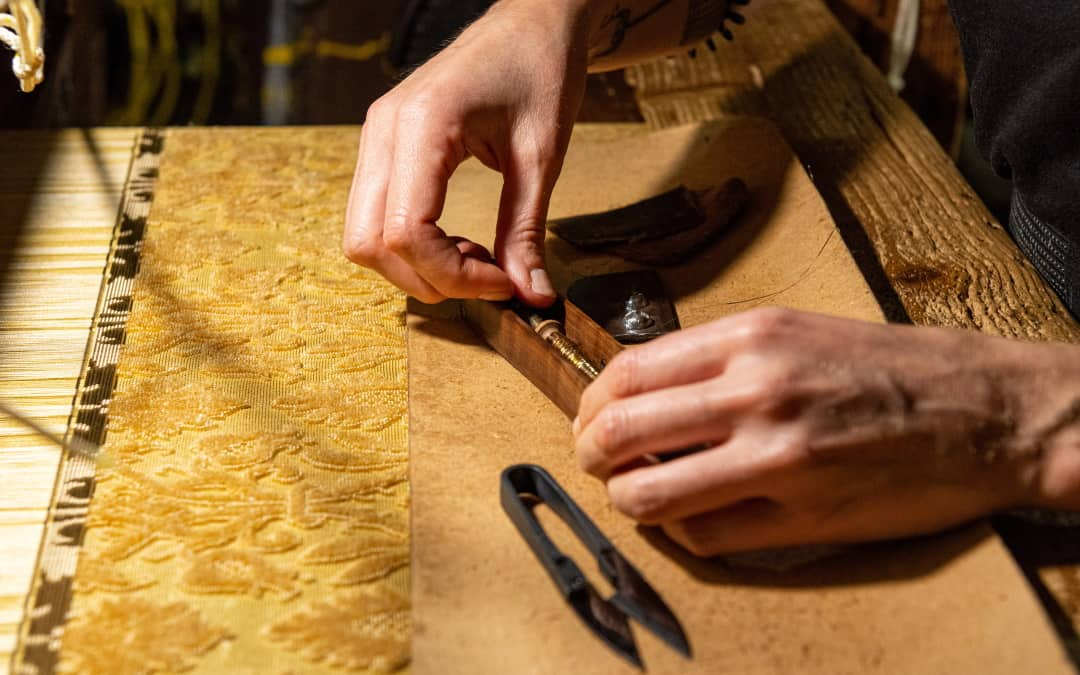
Hand Weaving of the Rinascimento Soprarizzo Velvet
“It was also a wonderful time when Anonimo Veneziano was filmed. There were Enrico Maria Salerno, Florinda Bolkan, and Tony Musante… And I ended up in the movie too! You can actually see me: in my own small way, I became an actress too.”
In 1970, the Tessitura served as the setting for some scenes of Anonimo Veneziano (Anonymous Venetian), helping create the evocative atmosphere of the famous film.
Learn more: A Magical Place Even in Films
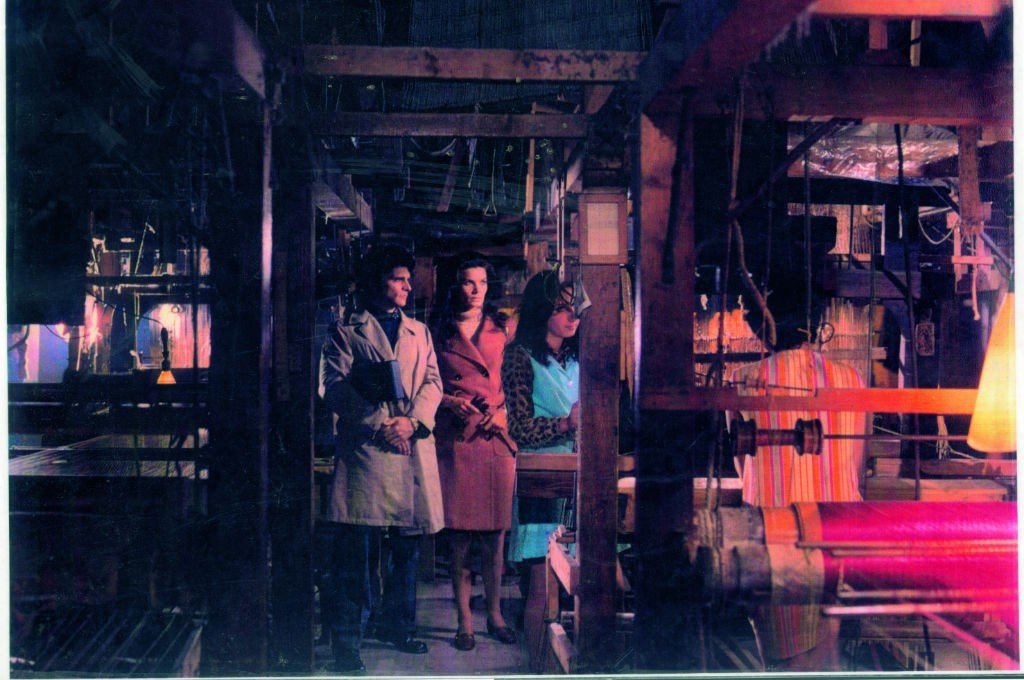
A Scene from the Film Anonimo Veneziano (Anonymous Venetian) Shot Inside the Tessitura Bevilacqua (1970)
“I remember this loom. At the time, I was working on the third floor, and we were making a textile for Roberta di Camerino. I think it was a design called ‘Tartaruga’, because it really looked like a turtle shell.”
In 1950, a long collaboration began between Giulio Bevilacqua and Giuliana Coen, known as Roberta di Camerino, which would go on to mark the history of Venetian craftsmanship. Among the most celebrated creations made with Bevilacqua velvets is the iconic Bagonghi handbag.
Learn more: Roberta di Camerino and Bevilacqua Velvets
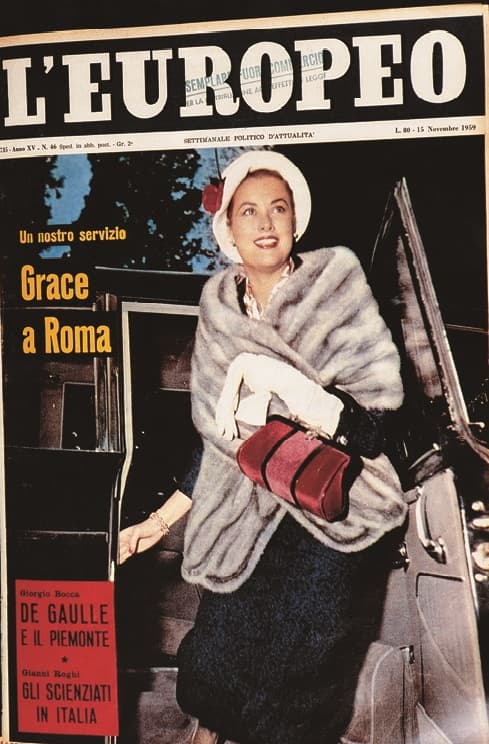
Grace Kelly and Her Bagonghi Handbag by Roberta Di Camerino in Bevilacqua Velvet
“I look at the girls who work here today with admiration. They know how to explain their work naturally and, unlike us, they independently follow the entire process, from the spool to the finished textile. My hat is off to today’s weavers.”
Teresa Perin
“I was looking for a job close to home. The parish priest told me: ‘I know Bevilacqua. I’ll write a letter for you; go and see if you like it and if they need someone.’ I came here, and they were looking for girls for daily work, not to weave, but to prepare everything needed for production: I prepared the warps, the bobbins, and I tied the cotton threads, while the silk threads were glued one by one. To glue a thousand threads took about an hour, but the warps could have as many as nine thousand threads. It was demanding work; you had to be extremely careful: making a mistake with even one thread could cause the textile to be defective.”

Weaver Teresa Working at the Vertical Warper
The looms still used today by the Tessitura have their roots in the tradition of the Venetian School of the Art of Silk. Some continue to be used for the most exclusive productions, alongside modern technologies, keeping a unique artisanal knowledge alive.
Learn more: The Jacquard loom: from the 1806 revolution to Bevilacqua velvets
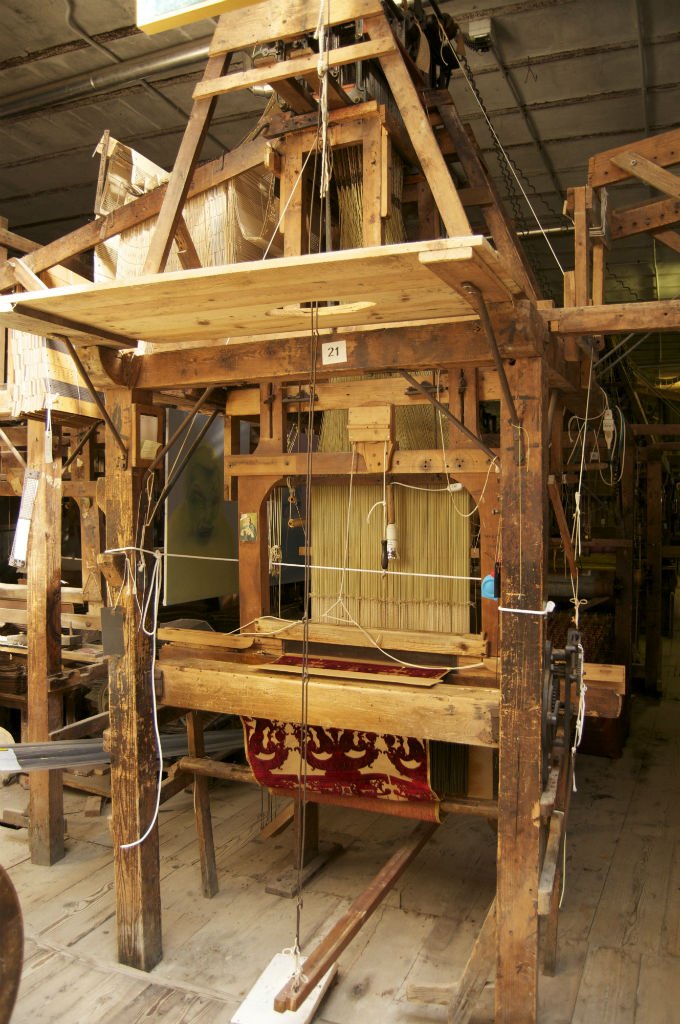
Jacquard Loom for Velvet Production
“I remember the work we did to bring a loom to the Doge’s Palace. It was a wonderful thing. We threaded everything, then cut it apart, transported every single piece, and finally tied everything back together again, above and below, to put it back into operation. Then Mariella came and wove in front of the visitors. It was a huge satisfaction. We thought: ‘How will we ever manage to bring a loom there?’ And yet we did it.”
In 2004, on the occasion of the exhibition The Spirit of Tradition, held in the Sala del Piovego at the Doge’s Palace, a fully functioning loom allowed visitors to observe the creation of soprarizzo velvet firsthand, thanks to the work of our weaver Mariella.
Learn more: The Spirit of Tradition
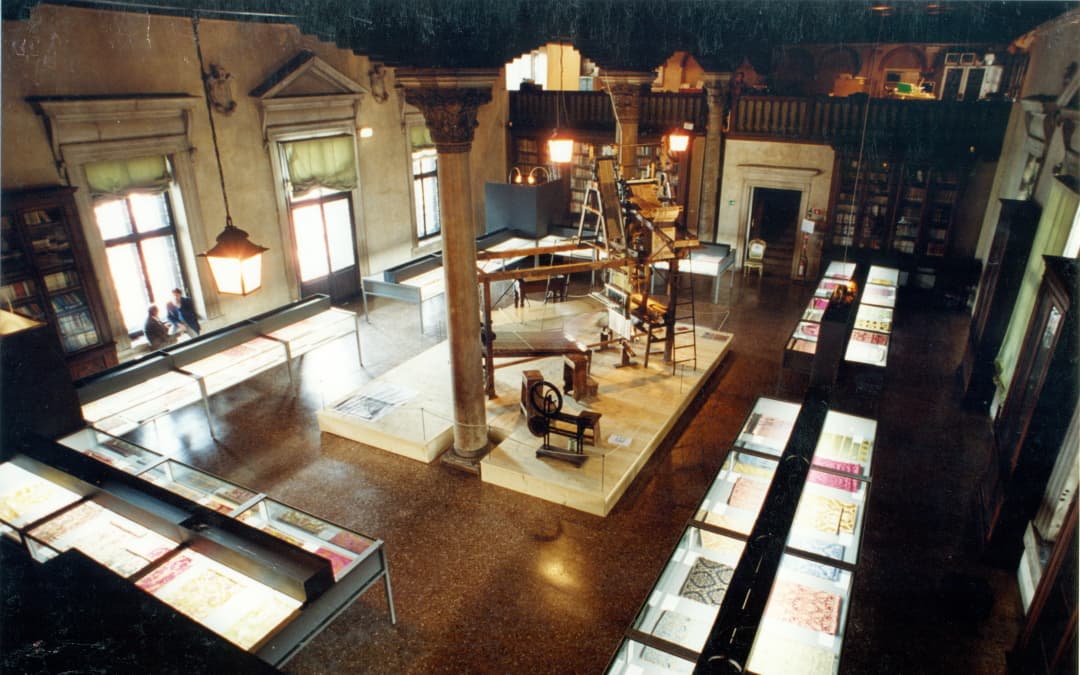
The Bevilacqua Loom Installed in the Sala Del Piovego at the Doge’s Palace, Venice 2004
Silvana and Teresa’s words tell much more than the story of a profession. They tell the story of a community, a knowledge built with patience, and a passion that continues to live in every Bevilacqua textile. To discover their experiences more closely and listen to their voices, we invite you to watch the full interviews below.