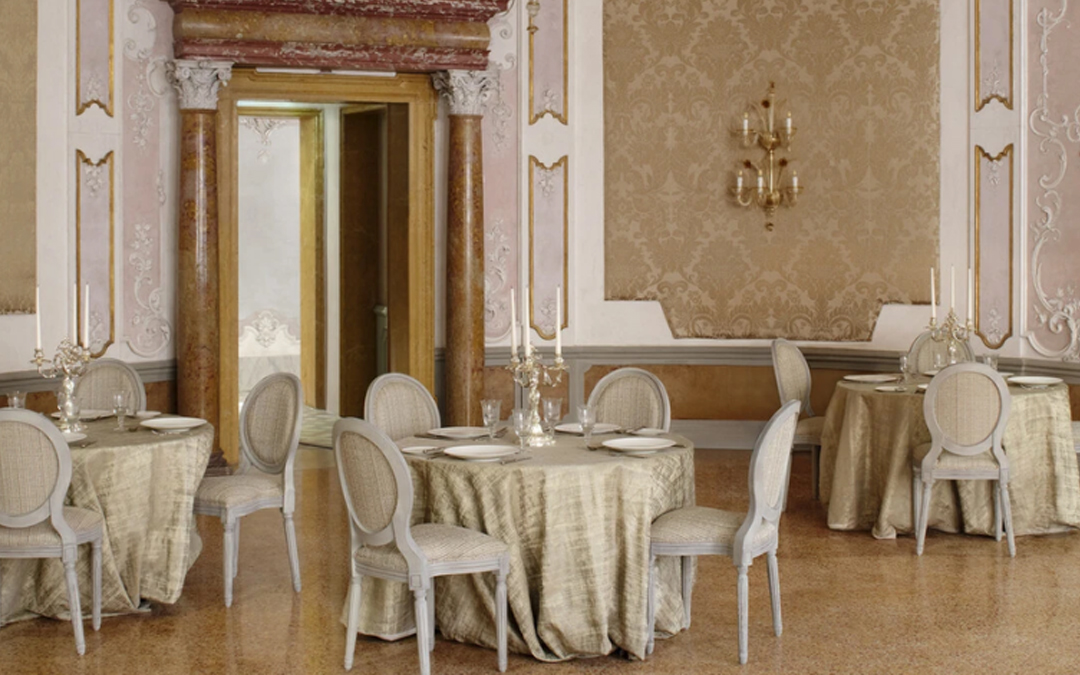
In the heart of the Cannaregio district, the legendary Palazzo Donà Giovannelli has added a new chapter to its centuries-old story: today it is Orient Express Venice, a five-star hotel designed by architect Aline Asmar d’Amman. In this extraordinary project, Luigi Bevilacqua fabrics have found their natural home.
A Palace Transformed into a Hotel, Without Forgetting Itself
After eight years of restoration, Orient Express Venice has opened its doors in one of the city’s most authentic districts, Cannaregio. Forty-seven rooms, suites, and private residences now occupy spaces that have welcomed Venetian nobility for centuries.
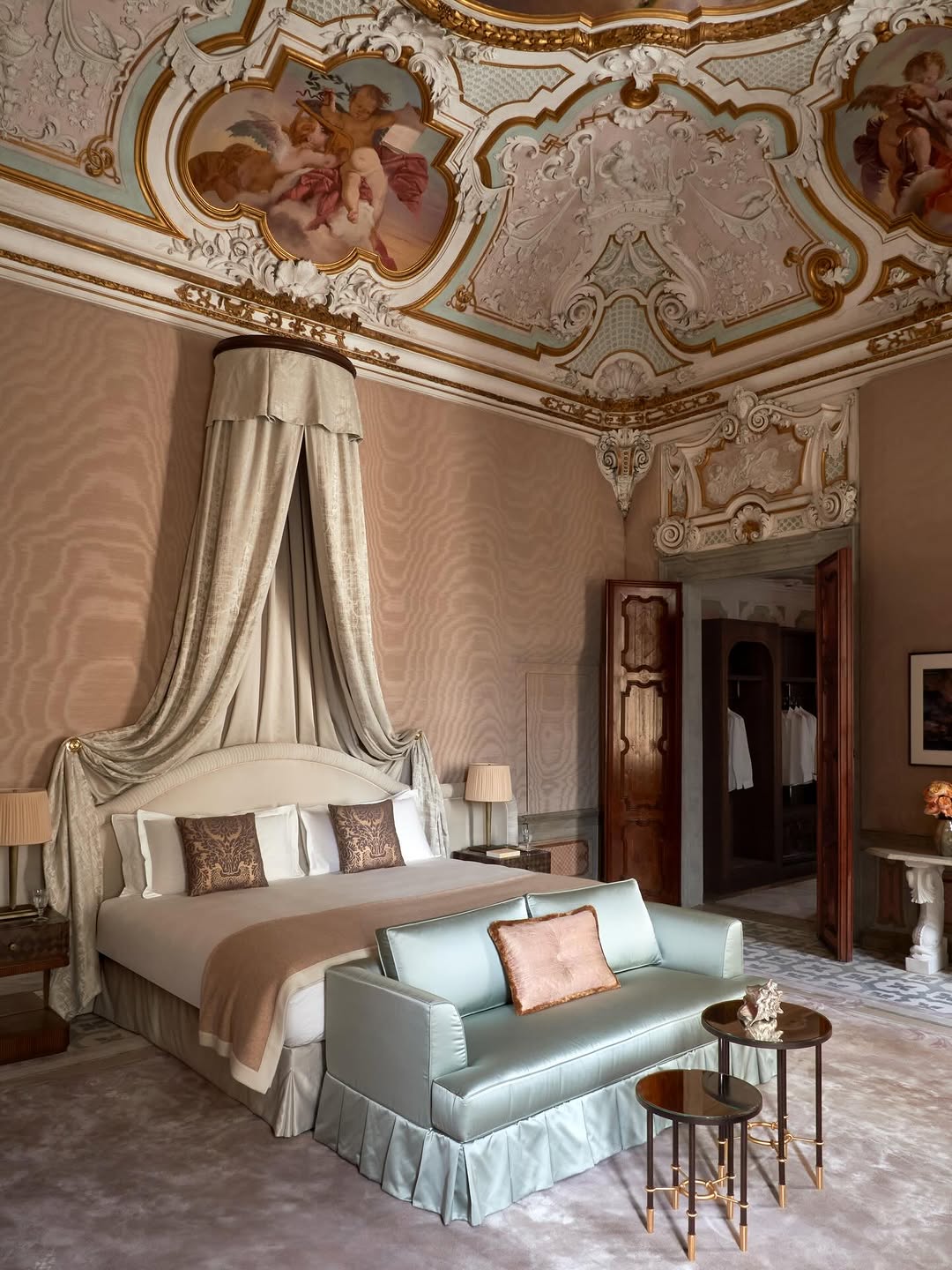
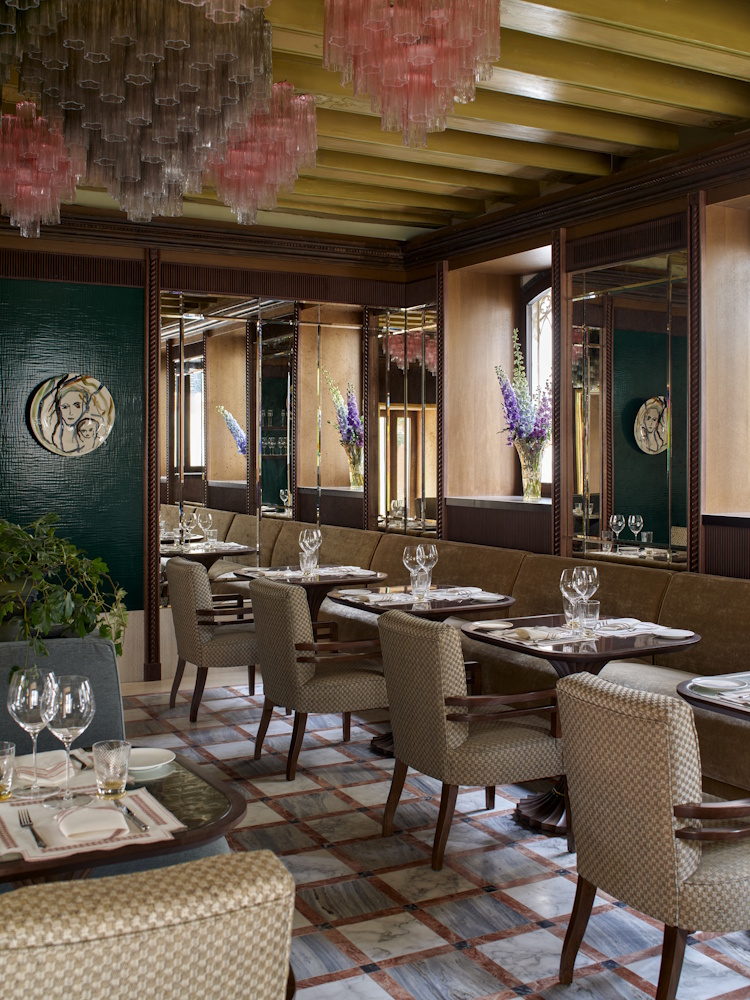
The hotel’s style is the result of a masterful balance between preservation and contemporaneity. Architect Aline Asmar d’Amman led a restoration focused on enhancing original elements: frescoes, mosaic floors, Murano glass chandeliers, and the extraordinary 19th-century octagonal staircase by Giovanni Battista Meduna were preserved and reintegrated into the narrative. The result is a dialogue across eras: Venetian Gothic, Baroque, Neoclassical, and modernity, where no voice overpowers another.
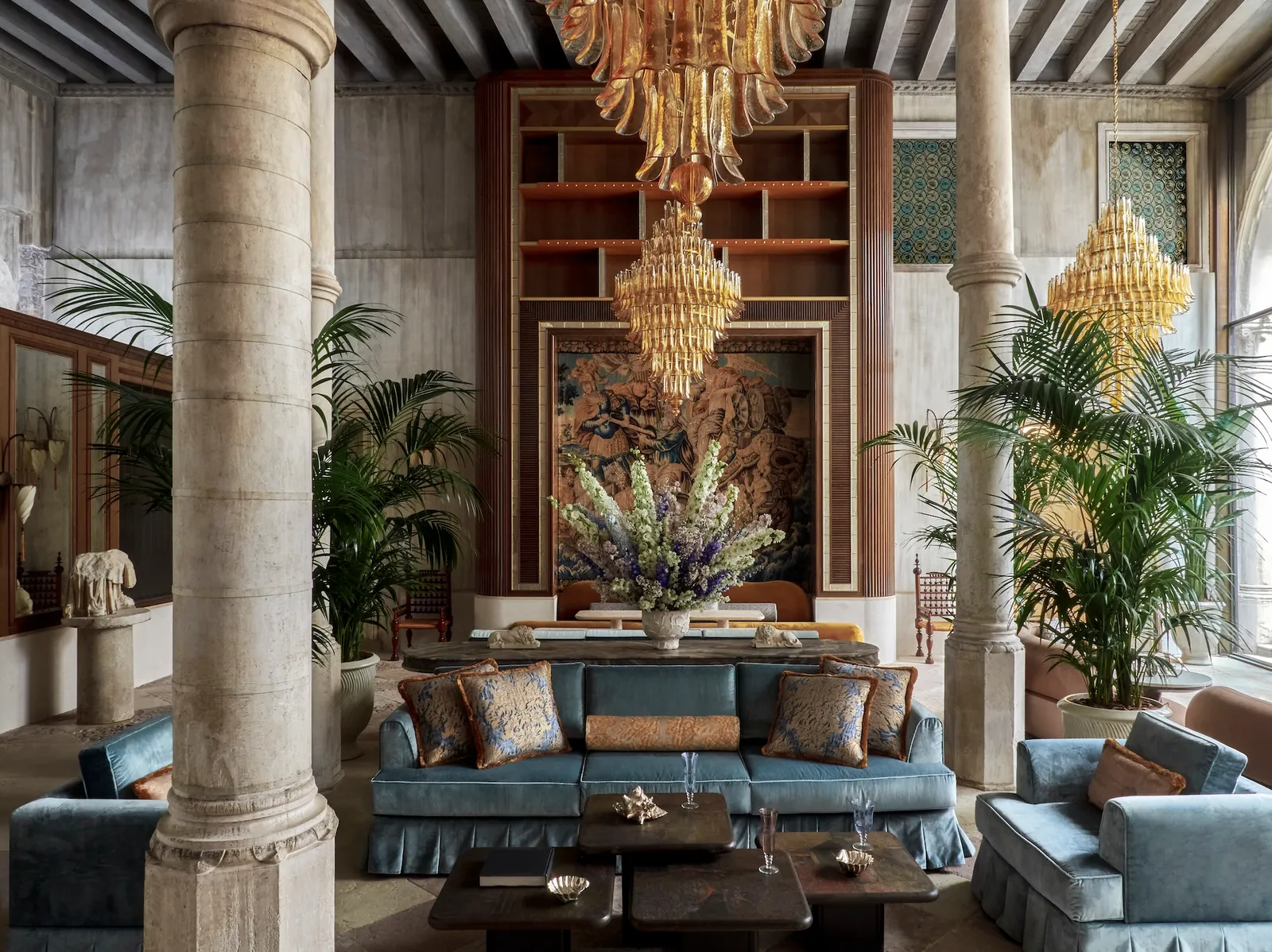
This philosophy aligns perfectly with the idea of luxury embodied by the Orient Express brand: a cultured, artisanal, almost obsessive dedication to detail that highlights the collective effort of master builders and artisans, where no individual is more important than the tradition they represent.
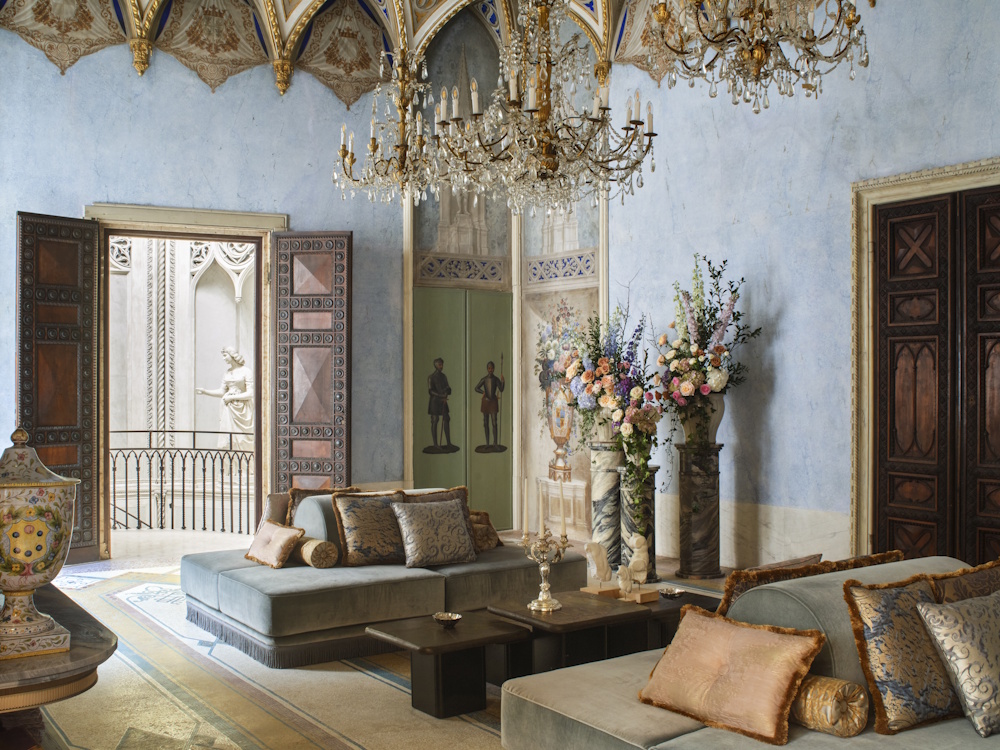
This vision finds its ultimate expression in the Salone Vittoria, the most solemn space in the entire palace. Overlooking the Santa Fosca canal, it was conceived in 1548 for the wedding of the Duke of Urbino’s son to Vittoria Farnese, Princess of Parma, one of the most lavish celebrations of the Venetian Renaissance. Redesigned in Neo-Gothic style in the 19th century by Meduna, it still preserves its original Murano chandelier and an atmosphere of refined ceremony that has hosted balls, cultural gatherings, and aristocratic evenings through the centuries. Today, it is the ideal setting for weddings, gala dinners, and private celebrations. And it is here that our textiles have found their place.
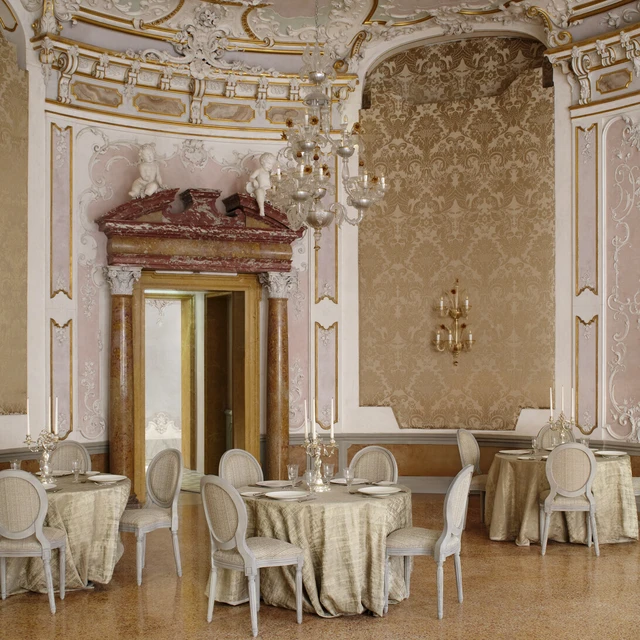
Acanto Brocatelle in the Vittoria Hall
The Acanto Brocatelle: When Fabric Becomes Architecture
For the Salone Vittoria, Aline Asmar d’Amman selected our Acanto brocatelle, and for us, it felt like a natural choice, as if the fabric and the space had always known each other.
Brocatelle belongs to the family of lampas fabrics, characterized by large raised patterns created through the contrast between a primary warp and weft, both in silk, and a second series of warp and weft threads that are very stiff, traditionally hemp or linen, giving the textile its distinctive sculptural, almost architectural quality. Lighter than brocade yet equally precious, it lends itself naturally to luxury interiors: upholstery, wall coverings, draperies, and liturgical furnishings.
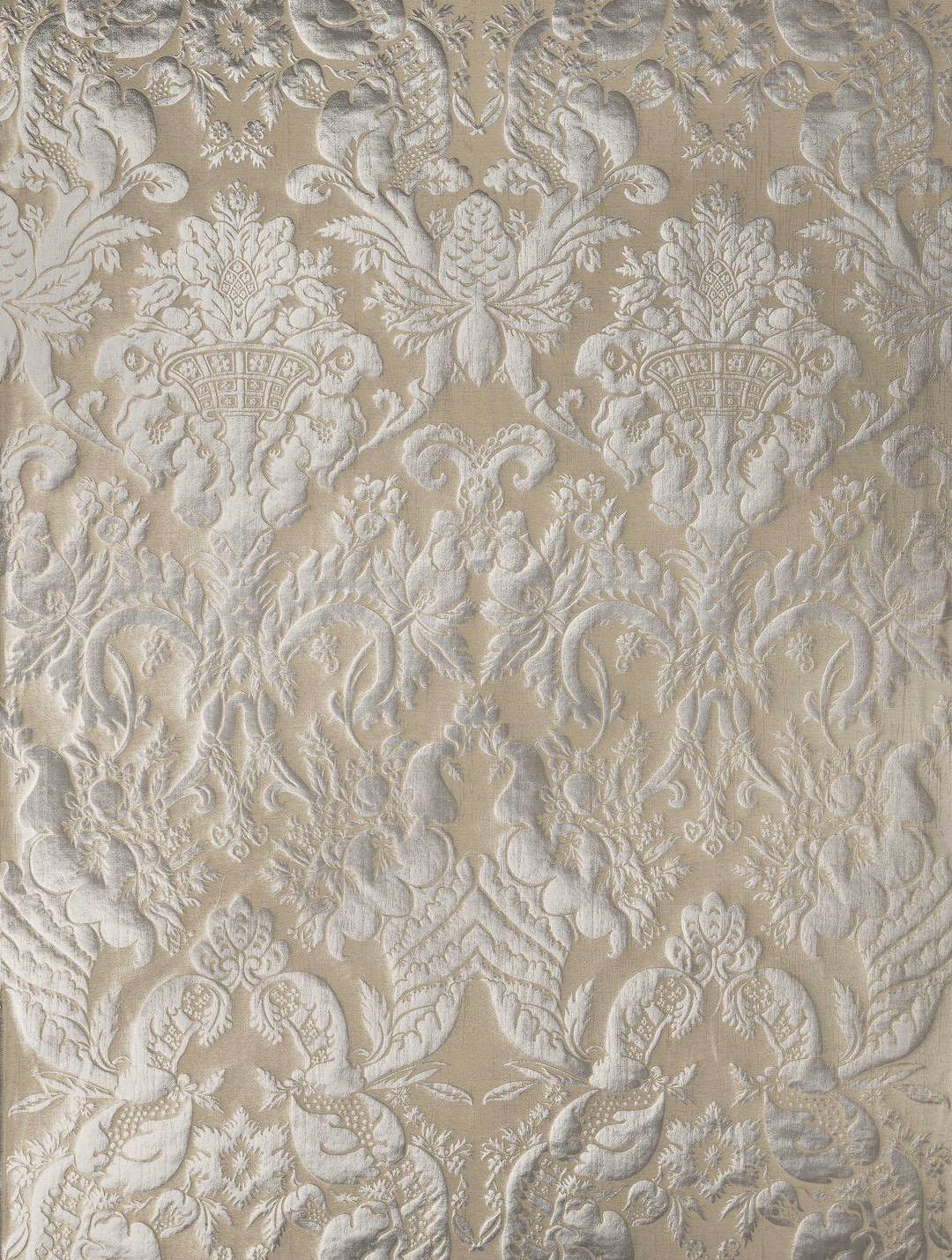
Acanto Brocatelle – Cloud White
Its history is deeply intertwined with that of the palace in which we find ourselves today. Widely adopted in 16th-century Italy, brocatelle became the fabric of choice for aristocratic residences and prestigious ecclesiastical settings. Its dense linen structure made it possible to create elaborate decorations on a compact, uniform ground. Its success accompanied the Renaissance into the height of the Baroque period, crossing centuries with the same grace with which it now moves through the halls of a 15th-century palace. Even today, it remains one of the most beloved textiles among interior designers.
Our Acanto embodies all of this heritage. The motif, an elegant composition of curling acanthus leaves enriched with naturalistic elements, emerges delicately from the ground, revealed by its own luminosity. It is a design rooted in Western decorative iconography for millennia, appearing in Corinthian capitals, Renaissance inlays, and Baroque ceilings. In the Salone Vittoria, in a champagne tone created especially for this project, it converses with frescoes and stucco as if it had always belonged there, as if, in some way, it had been waiting.
Aline Asmar d’Amman: Dressing Spaces
Understanding why such a choice was possible also means understanding who Aline Asmar d’Amman is.
An architect and interior designer originally from Beirut, Aline Asmar d’Amman is renowned for her ability to transform spaces into true architectural narratives.
Her international education and experience working alongside leading figures in design and fashion, including Karl Lagerfeld, have helped shape a distinctive style. For her, spaces are not simply furnished; they are dressed, with a couture-like approach.
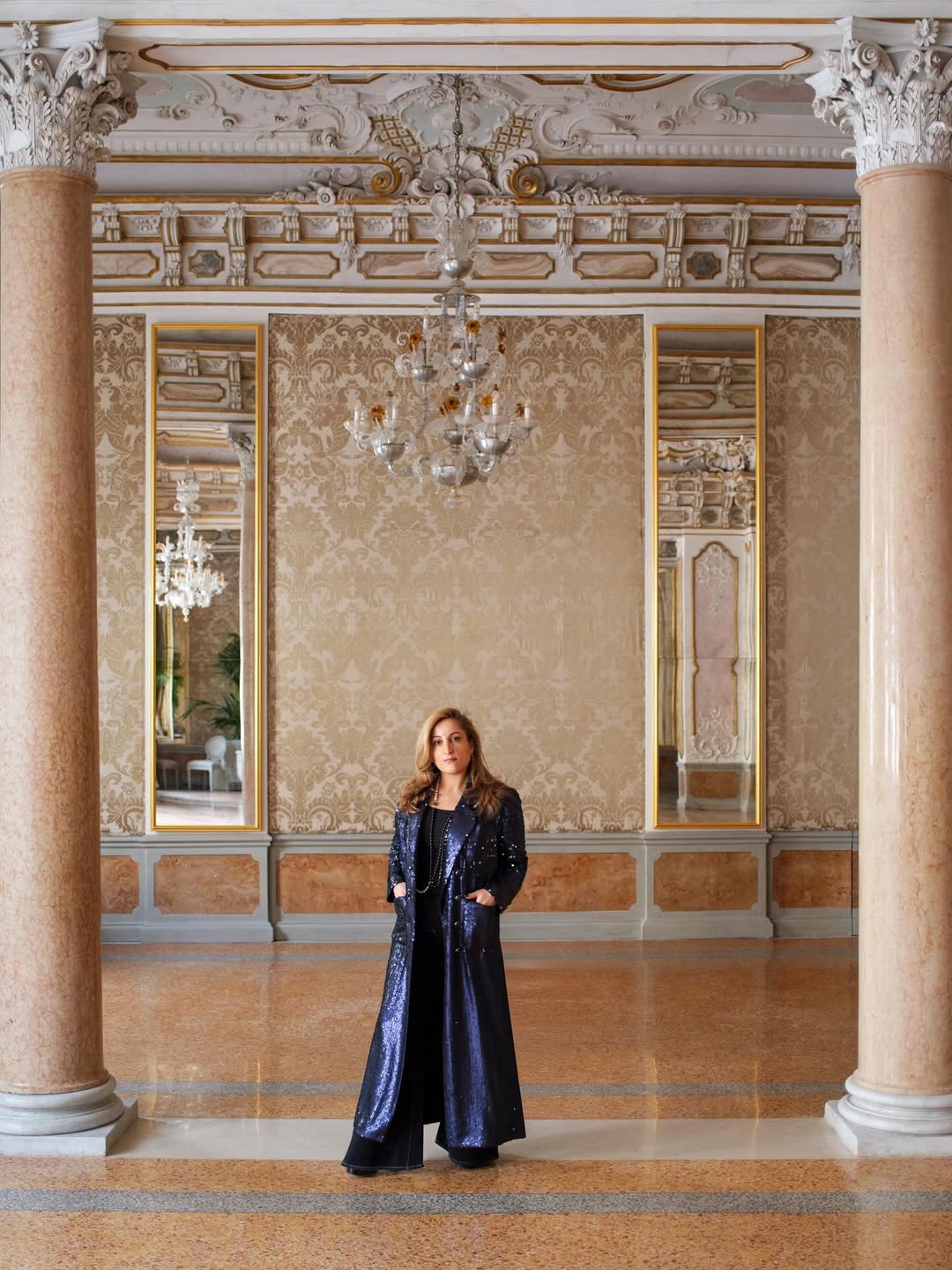
Aline Asmar d’Amman in the Vittoria Hall
In the Palazzo Donà Giovannelli project, this vision becomes a continuous dialogue between historical heritage and contemporary creativity. Her style is distinguished by a sensitivity that recognizes beauty in the traces of time, blending precious materials with raw surfaces, architectural tradition with contemporary language.
The result is an intervention that does not erase the memory of the place but amplifies it, transforming each room into a narrative experience capable of evoking emotions and suggestions.
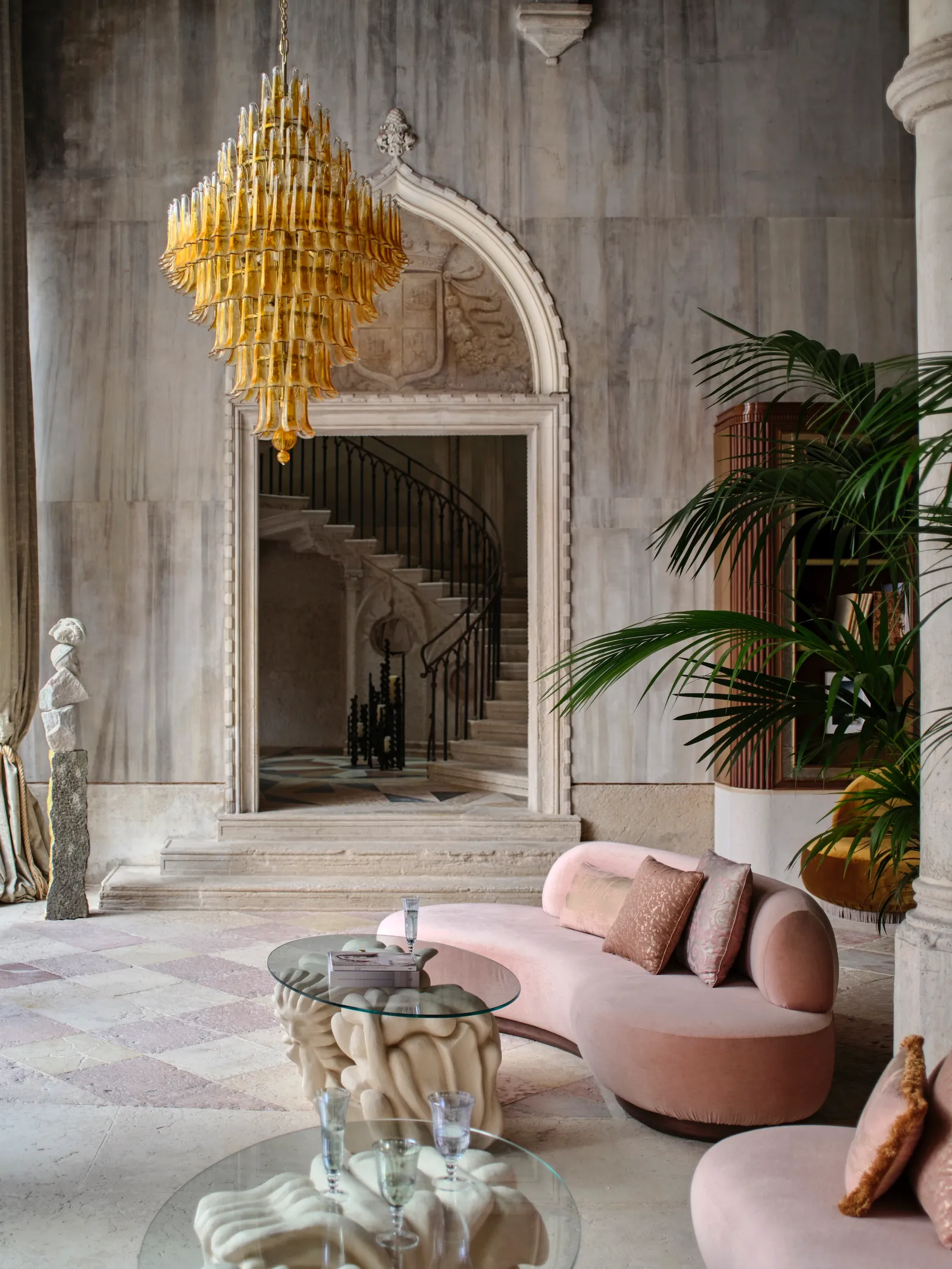
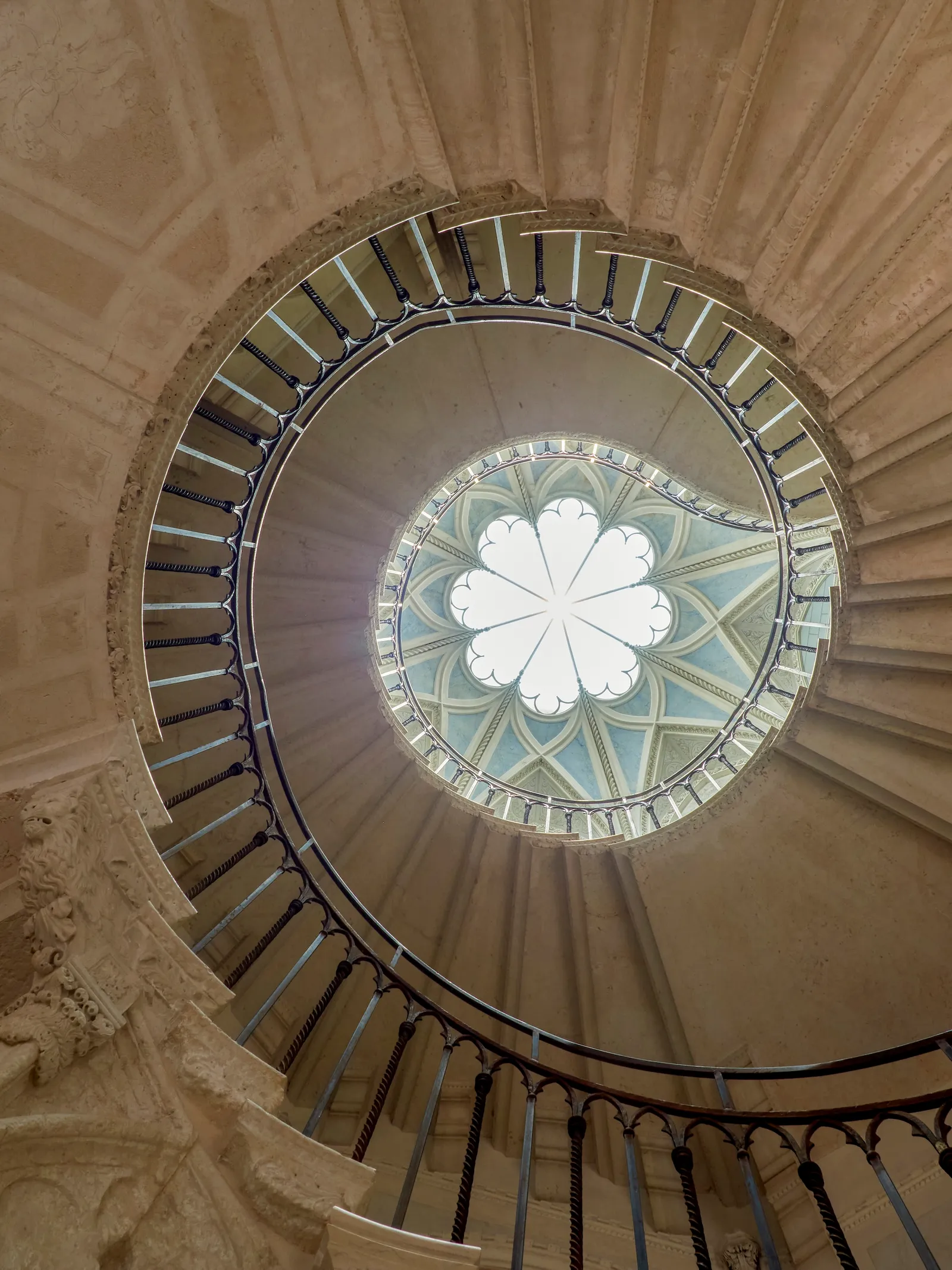
Palazzo Donà Giovannelli: Six Centuries of Venetian History
The history of this palace is, in many ways, the history of Venice itself. Built in 1436, said to be designed by Filippo Calendario, the same architect responsible for the Doge’s Palace, it stands at the intersection of two canals in the Cannaregio district, with its spectacular façade defined by seven finely carved Gothic windows reflected in the Rio de Noale.
In the 16th century, the Serenissima gifted it to the Duke of Urbino, Francesco Maria della Rovere, who hosted grand celebrations here, including the wedding of his son to Princess Vittoria Farnese in 1548. In the following centuries, the palace passed to the Donà family and later, in 1838, to the Giovannelli family, a dynasty of industrialists from Bergamo who transformed it into a center of Venetian social life, enriching it with artworks and legendary stories. Among the paintings once housed here was La Tempesta by Giorgione, later acquired by the Italian state and transferred to the Gallerie dell’Accademia.
In the 19th century, Count Andrea Giovannelli entrusted Giovanni Battista Meduna, the architect of Teatro La Fenice and Ca’ d’Oro, with the task of enhancing the interiors with Neo-Gothic suggestions, Baroque elements, and the famous octagonal staircase crowned by a celestial vault. Each intervention left its mark; every era added a new element to this extraordinary palace.
Today, with Orient Express and Aline Asmar d’Amman, a new chapter opens in the story of Palazzo Donà Giovannelli, and we are honored that Bevilacqua silks are part of it.
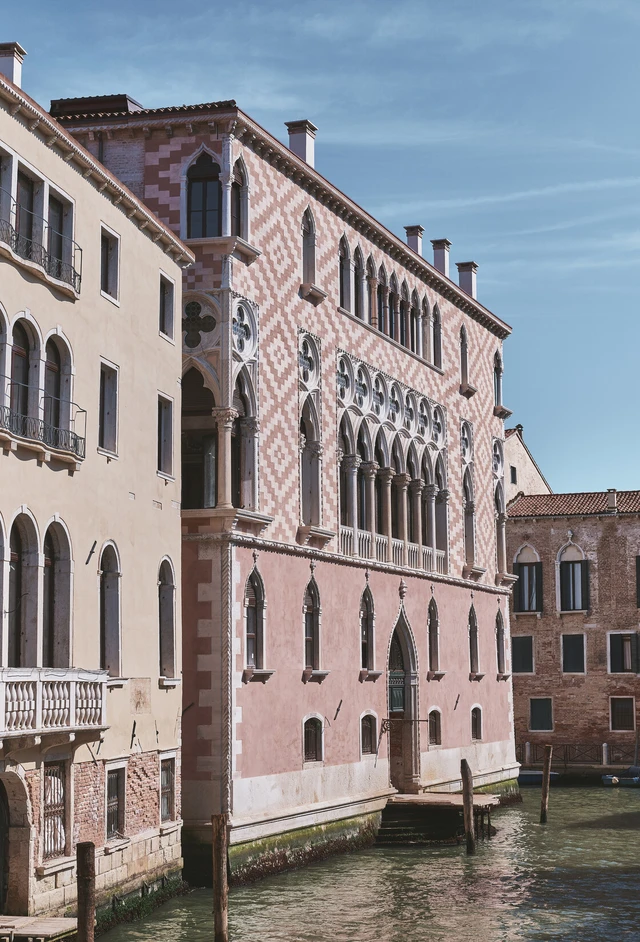
Orient Express Venice Hotel – Façade
Photo Credits: Giulio Ghirardi