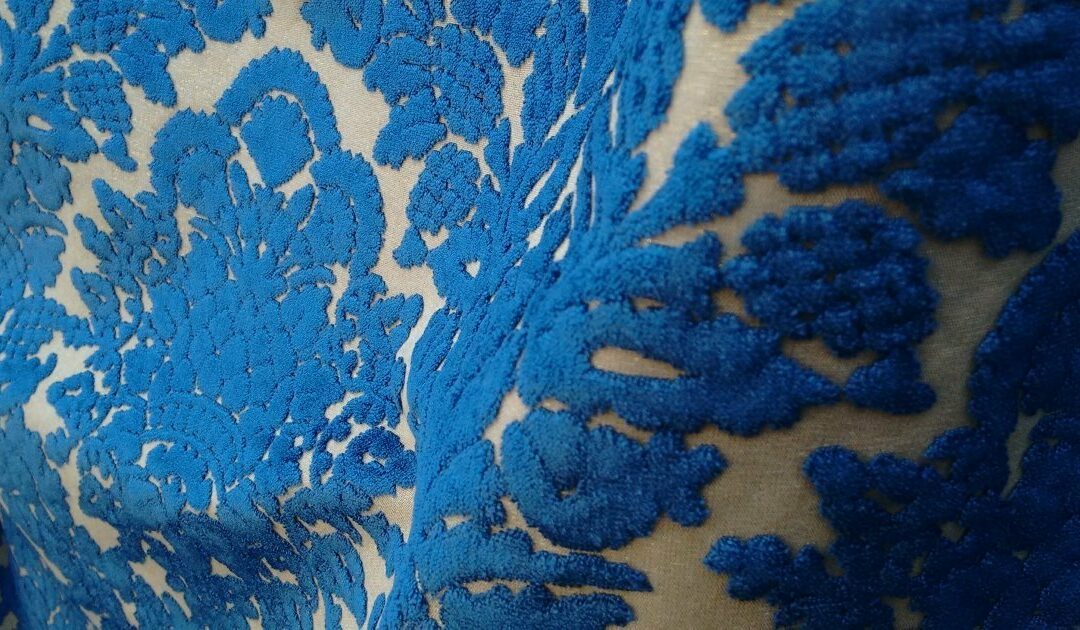
How did our ancestors decorate their houses and palaces, during the Renaissance? How did their clothes look like, since the patterns were the same as for furnishing? The textile scraps that have survived till our time are unfortunately few, but paintings come to our aid. And thanks to them we can now discover which were the patterns of Italian Renaissance fabrics.
The patterns of luxury upholstery and clothing fabrics during the Renaissance
Between approximately 1400 and 1600 the motifs which had been popular during the previous centuries kept on being used, with a difference, though: they were much bigger. In this period, the rich liked boasting their wealth, and they did it by widening the patterns of their textiles, too, or by putting gold and silver threads in them. But they chose new patterns to show off, as well, easily recognisable, like those on the clothes of Venetian Senators.
Pomegranate pattern
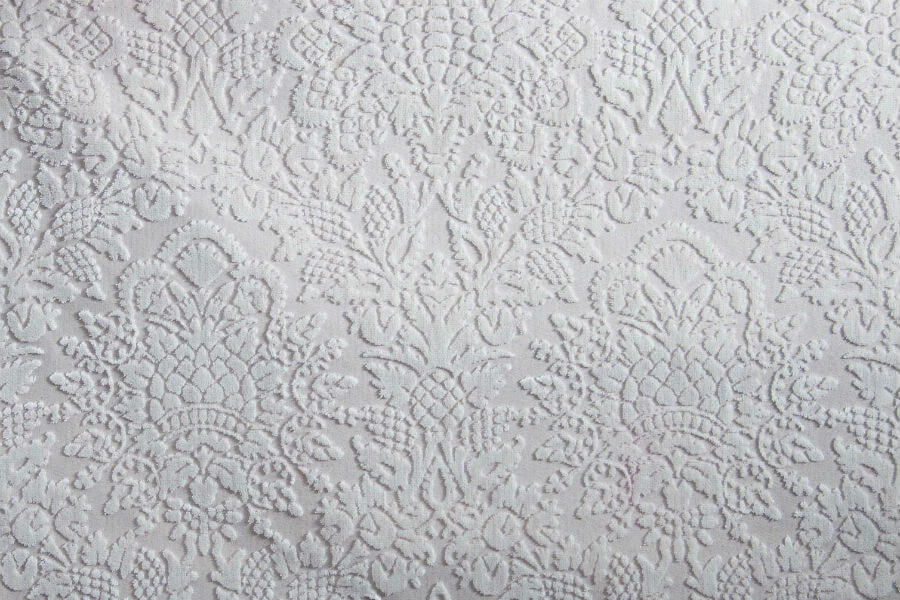
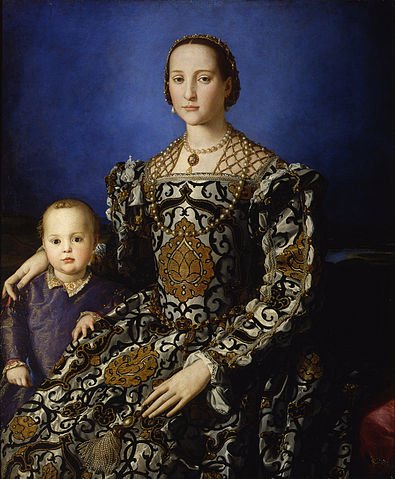
The most popular one was the so-called “pomegranate” pattern, but don’t let the name fool you: it doesn’t show just this fruit, but rather pine cones and lotus or thistle flowers, too. Persians considered pomegranate a symbol of fertility and immortality, and this meaning spread to the West right during the Renaissance. It was favoured among ladies, too, who associated it with an image of renown and wealth. Indeed, you can see it in all its splendour on Eleanor of Toledo’s dress, as portrayed by the Bronzino (around 1545). Here the pomegranate has another meaning, too: it’s one of the symbols of the Spanish court, from which Cosimo I de’ Medici’s wife came.
Mottoes and coats of arms of noble families
Embroidering mottoes and blazons of one’s house on fabrics was another way to express one’s power and signal the family one came from. An example is Ludovico the Moor’s (1452-1508) portrait by Giovanni Antonio Boltraffio: on his robe you can see the eagle and the snake of the Sforza family coat of arms.

Oriental patterns
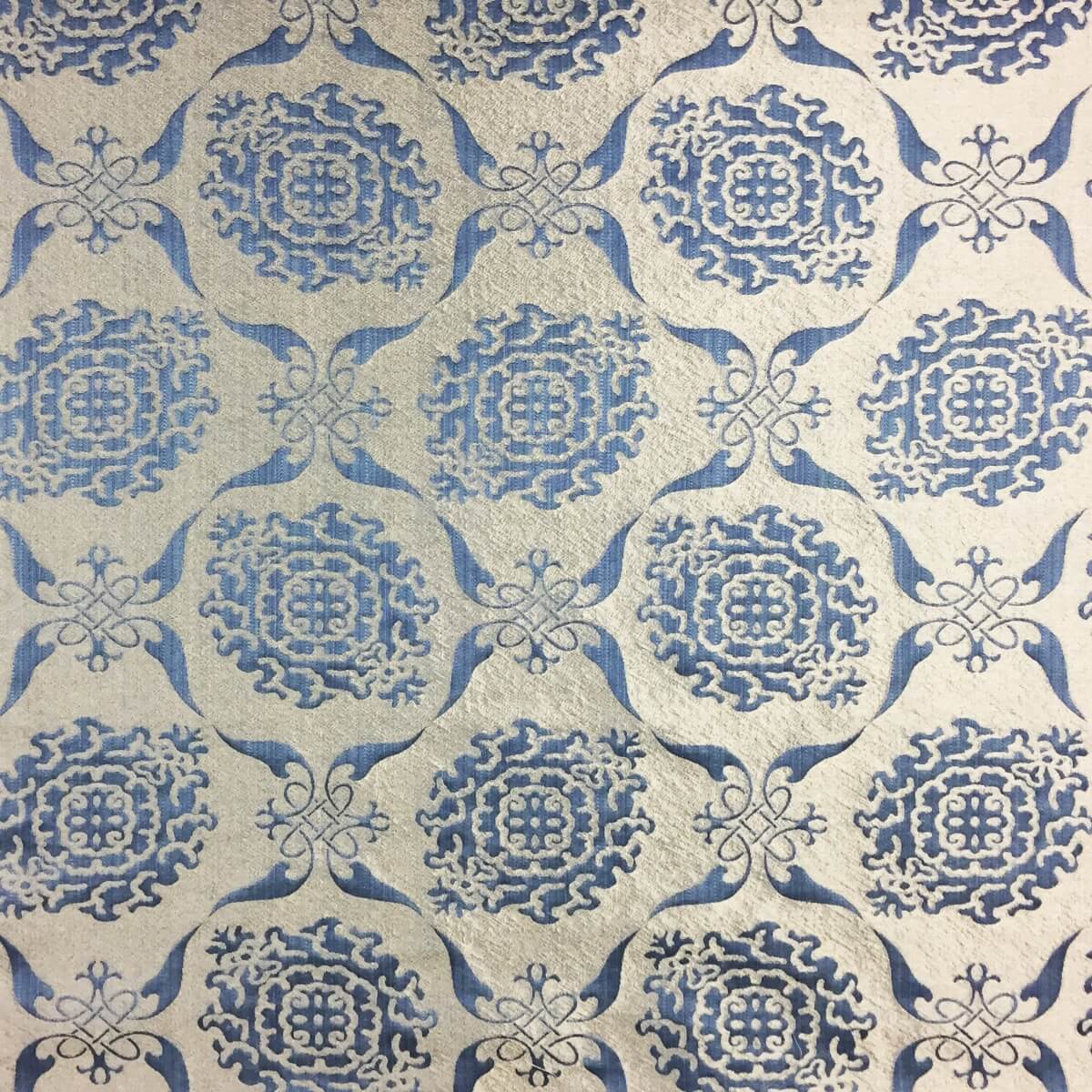
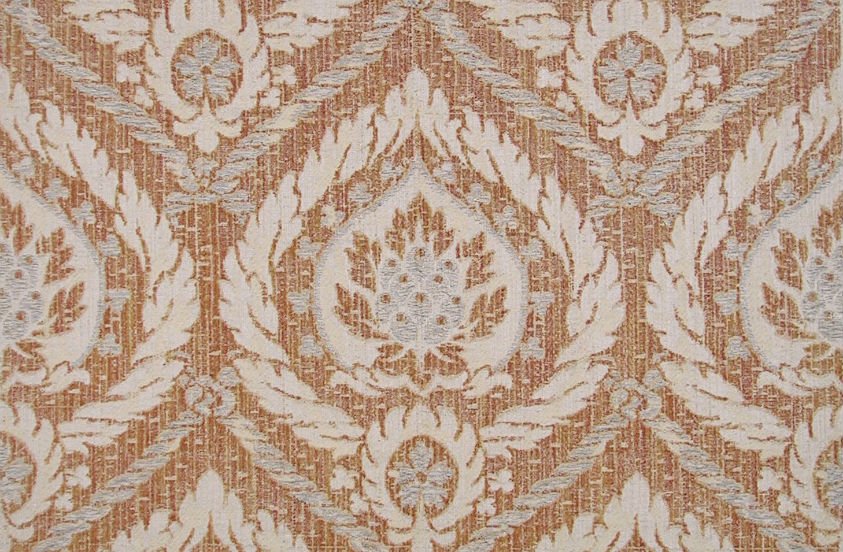
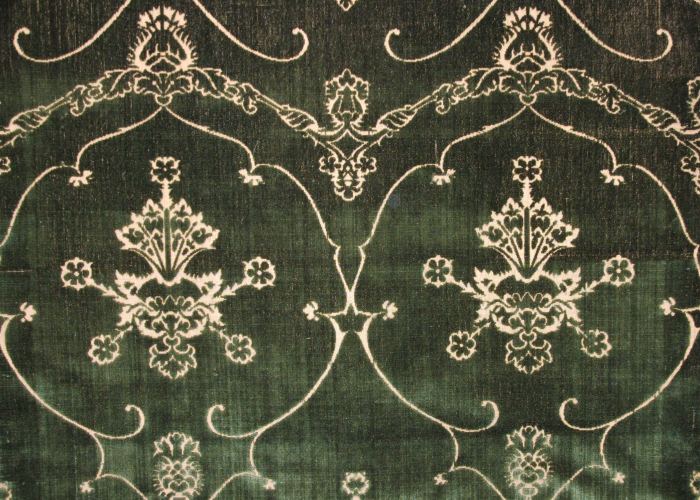
Renaissance was crowded with vegetal elements coming from China, India, Persia and Turkey. Like this velvet from our archive, whose grid pattern is very similar to some Turkish textiles from the 16th century, characterised by a grid, large designs and natural elements. The grid here consists of oval garlands with oak leaves, culminating in a carnation and surrounding a pine cone.
“A griccia” pattern
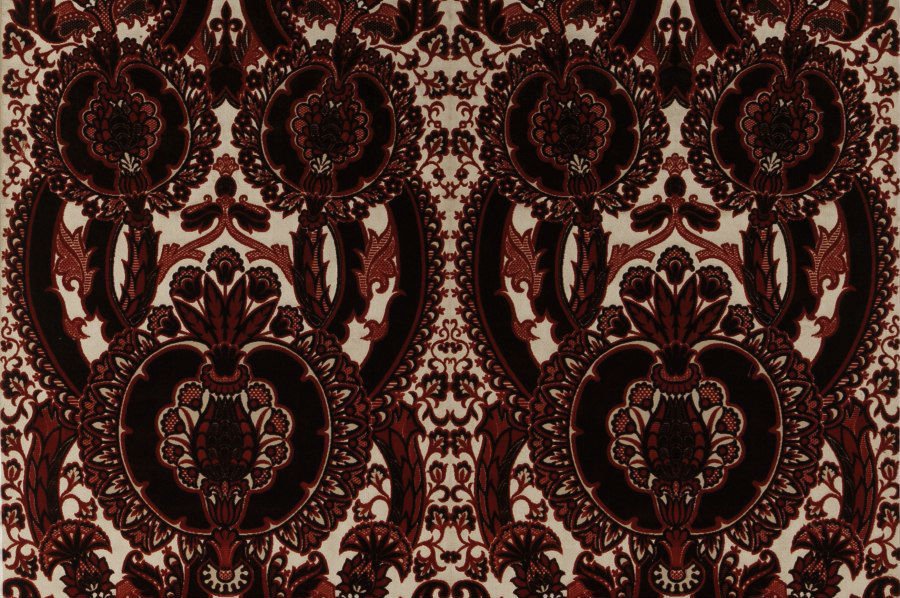
The “griccia” motif is a pattern arranged vertically, with a sinuous trunk surrounded by leaves, most of all acanthus leaves, pine cones and the like. In our cut velvet you see here, the trunk is flanked by many pomegranates and finishes with a corolla, bordered by other pomegranates and thistles.
Griccia Velvet
“A cammino” pattern
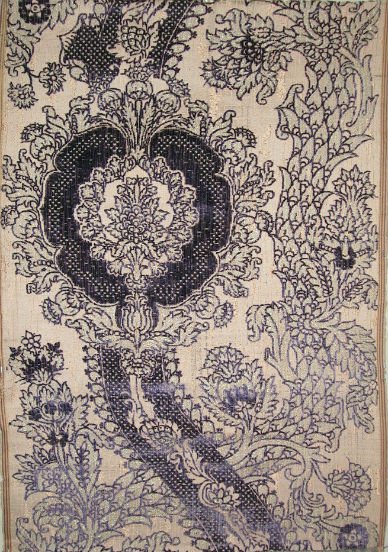
The “cammino” motif has a horizontal arrangement, instead, and is characterised by corollas with a varied number of lobes, containing pomegranates, pine cones or thistles, which alternate with leaves. In this example the lobes are 5 and enclose a pine cone.
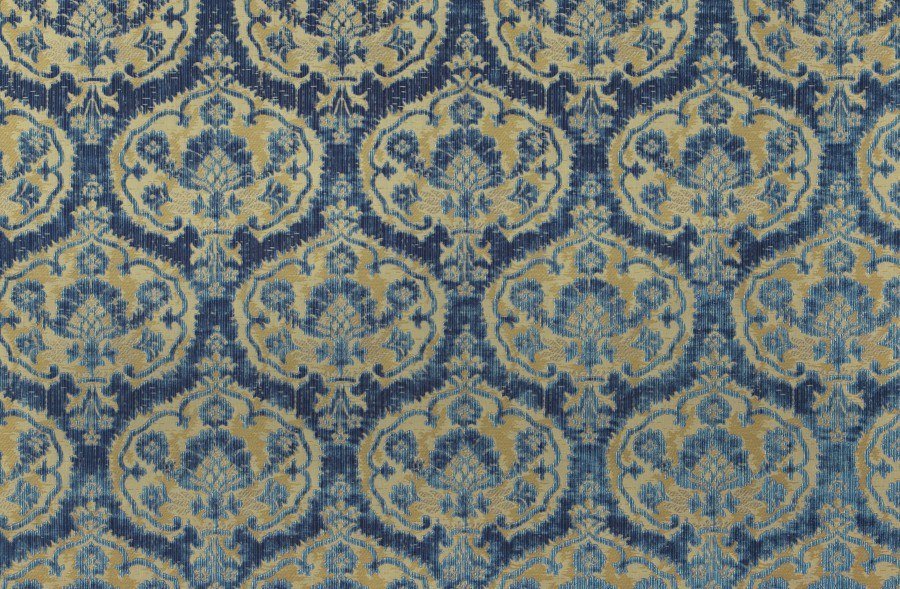
A particular kind of “a cammino” motif is the “inferriata” (or voided) pattern, whose corollas are rendered with thin outlines and are empty, apart from the pomegranate or flower in the middle of them. Our velvet has corollas with central pomegranates in bloom, and between each other there’s a pine cone.
Patterns created by artists of the time
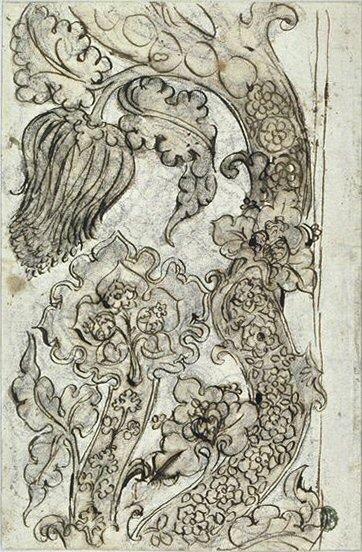
Jacopo Bellini and Pisanello, for instance, designed various griccia motifs, but not only. An example is this drawing by Pisanello, from the Codex Vallardi. It’s very similar to the griccia velvet we’ve shown above, isn’t it? The only problem is we can’t know whether the patterns they invented were meant for a real dress, or just for the clothes of the figures on their paintings.
“A mazze” pattern
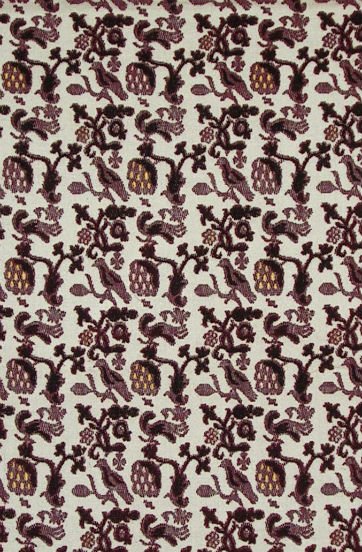
The “mazze” pattern is smaller than the others and owes its name to the small clubs that characterise it, usually placed at the end of twisted branches that form an S. Sometimes at the end of these branches there are natural elements or small animals.
As it is the case with our velvet: here the clubs are represented by undulating flowering racemes, and one of their twigs ends with a pheasant. They’re arranged in horizontal series, are flanked by small twigs bearing a dove and alternate with minute crosses, roses, lilies and thistle flowers. All elements are tiny and stylised, which reflects a major change that took place in the textile world at the end of the 16th century: clothing fabrics started to differentiate from furnishing fabrics, that’s why they shrinked their decorative patterns.
And there you have it: an overview of the most widely used patterns of Italian fabrics for upholstery and clothing during the Renaissance. Which, despite their age, can add a touch of elegance and creativity to modern houses, as well.