Sometimes it is not easy to determine the origins of the patterns that adorn fabrics, but in some cases, we can be absolutely certain. Grotesque decorations are one such example. They featured prominently in Baroque, Rococo, and Neoclassical fabrics, but their history goes much further back in time, to the era of the Roman Empire.
The Origin of Grotesque Decorations
In 1480, a young man accidentally fell into a fissure in the ground on Oppian Hill in Rome. He found himself inside a space that looked like a cave and discovered walls decorated with unusual, colorful figures: monsters, chimeras, and sphinxes.
These designs sparked great enthusiasm among the artists of the time, who flocked to admire them and were deeply fascinated by what they saw. They had themselves lowered into the underground chambers to observe these wonders and study their compositional elements, with the aim of incorporating them into their own work. They all referred to these decorations as “grotesques,” after the place where they had been discovered, which was thought to be a cave.
In fact, the paintings were found in rooms belonging to Nero’s Domus Aurea, which had remained buried and forgotten for centuries. By then, however, the term “grotesques” had quickly spread among artists, who continued to use it for this distinctive decorative style even after the true nature of the underground rooms became known.

The grotesques in the Library of Castel Sant’Angelo, Rome, painted by Luzio Luzi and inspired by the frescoes of the Domus Aurea.
Grotesques in Renaissance Art
In keeping with the Renaissance tendency to revive decorative motifs inspired by classical antiquity, grotesques became very popular in artistic and intellectual circles and found their way into the Renaissance palaces of nobles and popes. Their defining features included vivid colors, slender forms, fantastical figures, and natural elements such as garlands, arranged against a solid-colored, often white, background. The composition was organized with perfect symmetry.
The style spread from Rome to Florence, Bologna, and Siena, and later reached France, Spain, and England. Among the artists who contributed to its popularity were Pinturicchio, Botticelli, Filippino Lippi, and, above all, Raphael and his workshop.
Their work evolved over time, moving beyond the original motifs to include new interpretations of the classical grotesque, enriched with elements inspired primarily by the animal and plant kingdoms.
The distinctive quality of grotesques lay not only in their decorative richness, but also in the freedom with which elements from different realms were combined and transformed into a harmonious, unified composition.
Grotesques also began to appear beyond vaulted ceilings and walls, embellishing furniture, decorative objects, architectural fittings, and furnishing fabrics, including tapestries, curtains, and upholstery.
From Frescoes to Baroque Patterns for Fabrics
From the Baroque and Neoclassical periods through the Victorian era, grotesque decorations remained popular until the 19th century, adapting to the aesthetic principles of successive artistic movements.
Our Grottesche motif, inspired by this decorative tradition, dates back to the late 19th century, when combining different styles was particularly fashionable. The design brings together elements from the 16th, 17th, and 18th centuries.
The sphinxes, winged women, and head positioned between the winged figures date to the 16th century. Above the head is a shell-shaped ornament characteristic of the Rocaille style.
The canopy above the Rocaille ornament and the brackets supporting the sphinxes, on the other hand, are Baroque in style. Their scrollwork, curved lines, and elaborate structures recall Baroque architecture.
Rococo influences are also evident in the naturalistic elements, including the lavish floral arrangement in the bowl and the garlands.
We have chosen this motif for several of our fabrics: soprarizzo velvet, multicolored velvet, damask, and brocatelle.
In our Grottesche soprarizzo velvet, the extraordinary richness of shapes and details is achieved on a hand-operated loom. This is the most complex and precious of our velvets, and its intricate construction presented us with a challenge: creating an equally prestigious fabric featuring a similar motif, intended to become part of the furnishings of the Kremlin.

Grottesche Soprarizzo Velvet
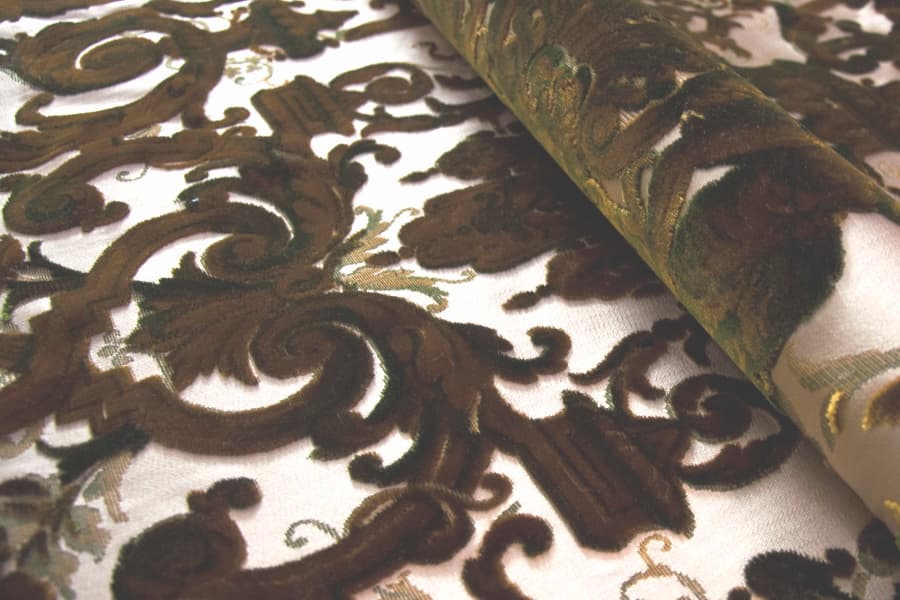
Grottesche Velvet – Green Gold
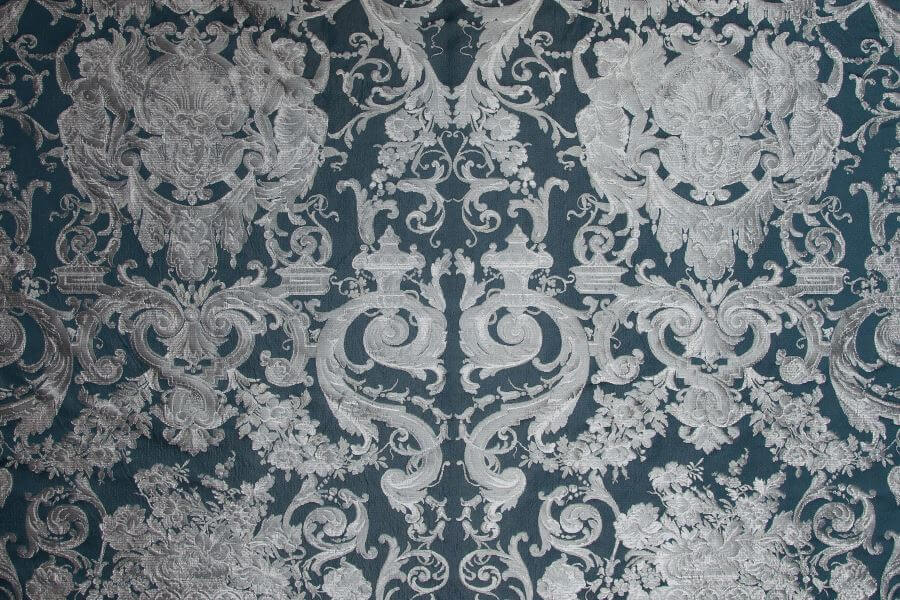
Grottesche Craquelé Damask – Blue Silver
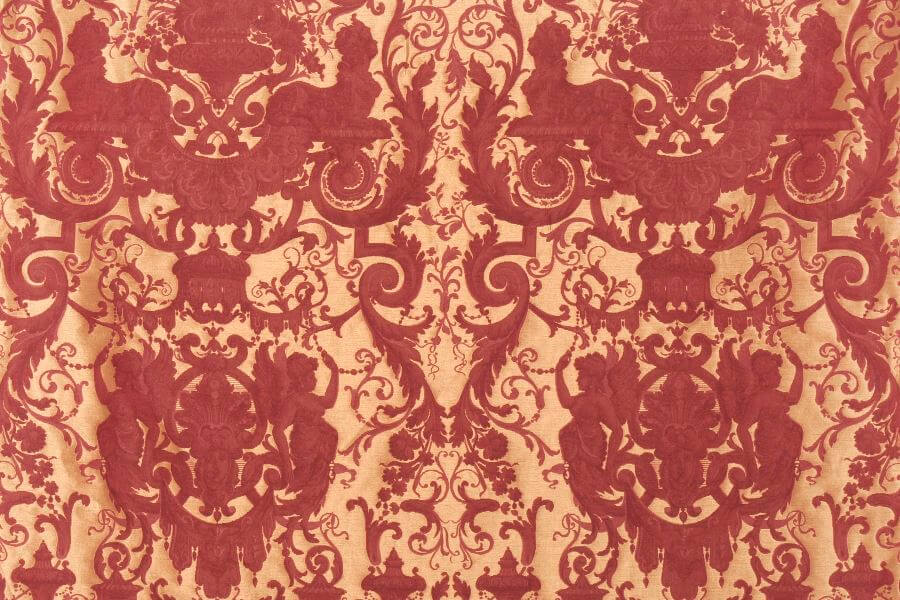
Grottesche Brocatelle – Antique Red
Grottesche Wallpaper
The richness of the Grottesche motif emerges from the interplay of botanical elements, fantastical figures, and ornamental structures that seem to form an imaginary architectural composition. Flower-filled vases, brackets, canopies, and scrollwork follow one another along a vertical axis. A rigorous symmetry organizes the complexity of the design without diminishing its dynamism.
The Grottesche wallpaper from the Bevilacqua Classics collection brings this decorative heritage to the walls, transforming a motif rooted in textile tradition into a surface that can define the character of an entire interior.
High-definition digital printing brings out every detail of the composition, while the use of noble fibers, such as pure silk, introduces shifting reflections and a tactile dimension that goes beyond the visual impact of the design.
The result is a wall covering in which historical memory, ornamental richness, and material research come together in dialogue with contemporary interiors, giving walls a distinctive, dramatic presence.
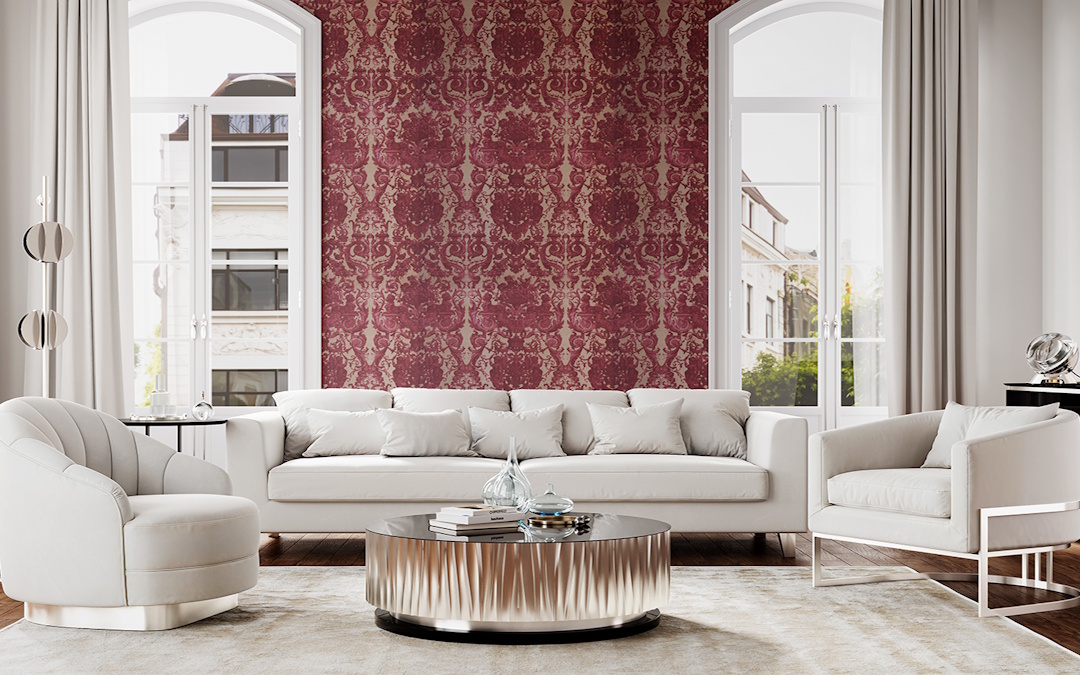
Grottesche Wallpaper – Pompei
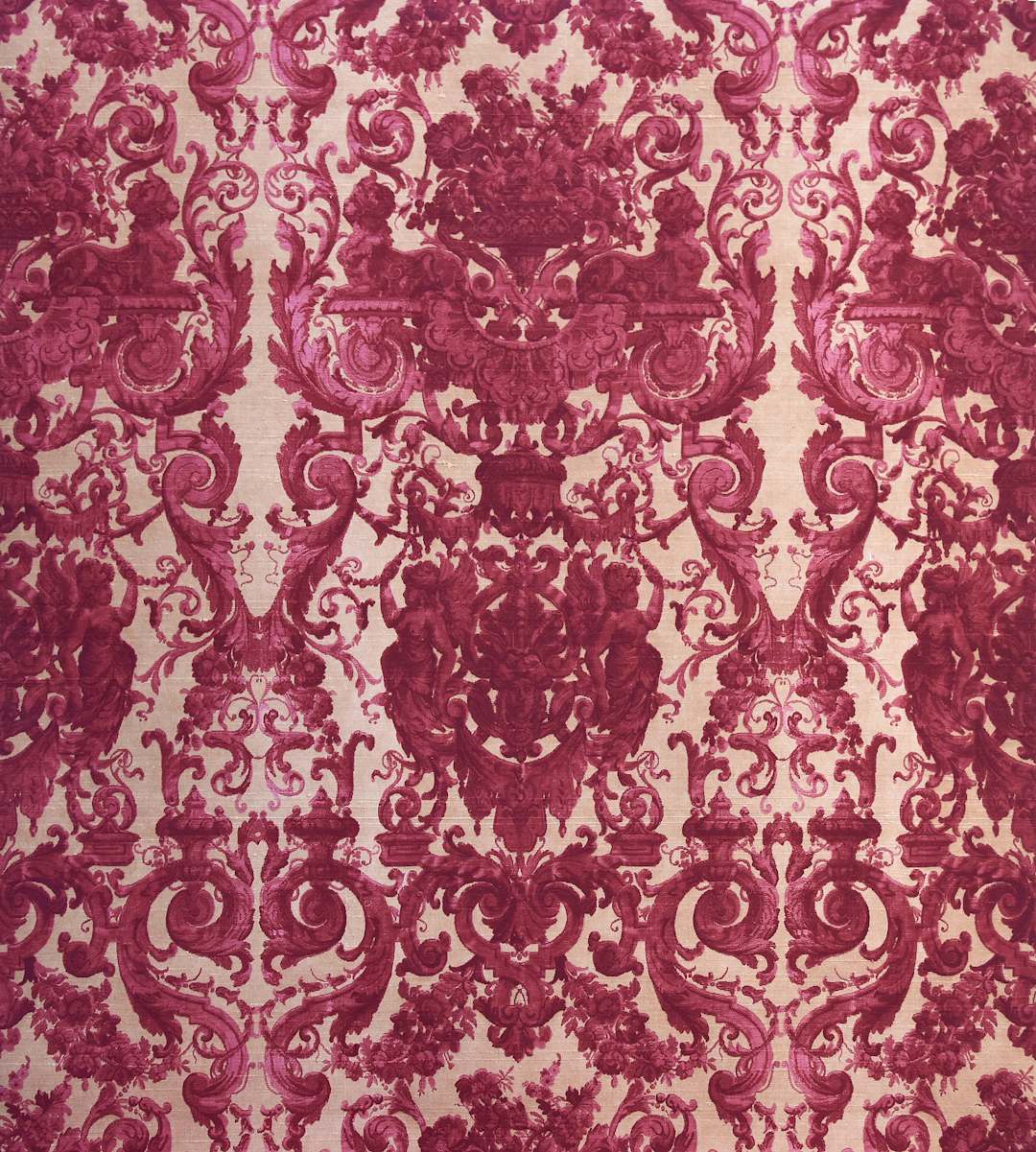
Grottesche Wallpaper – Pompei
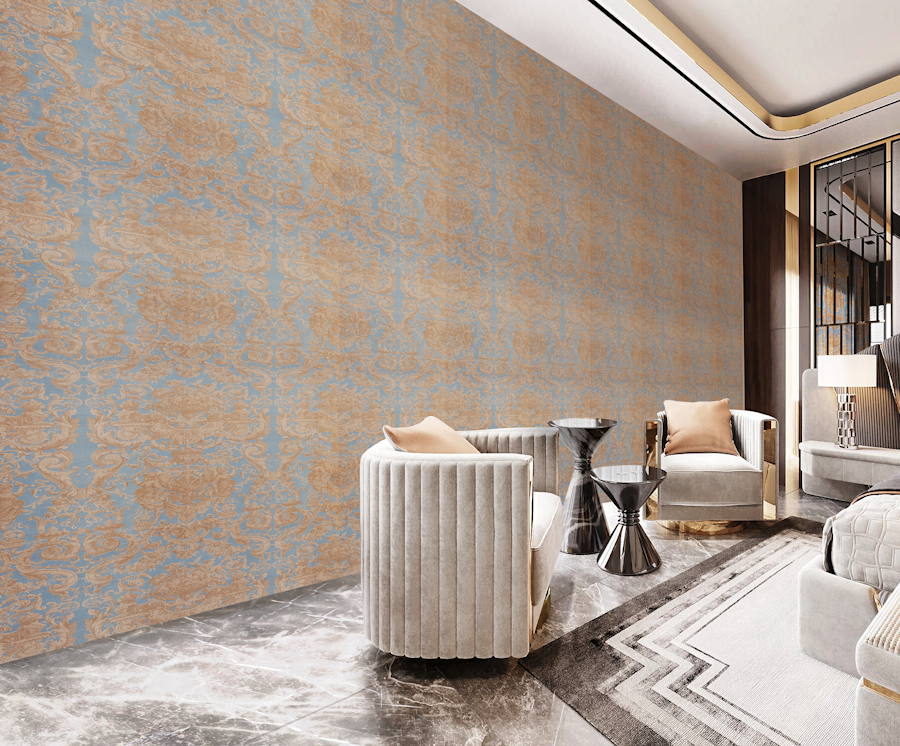
Grottesche Wallpaper – Rezzonico
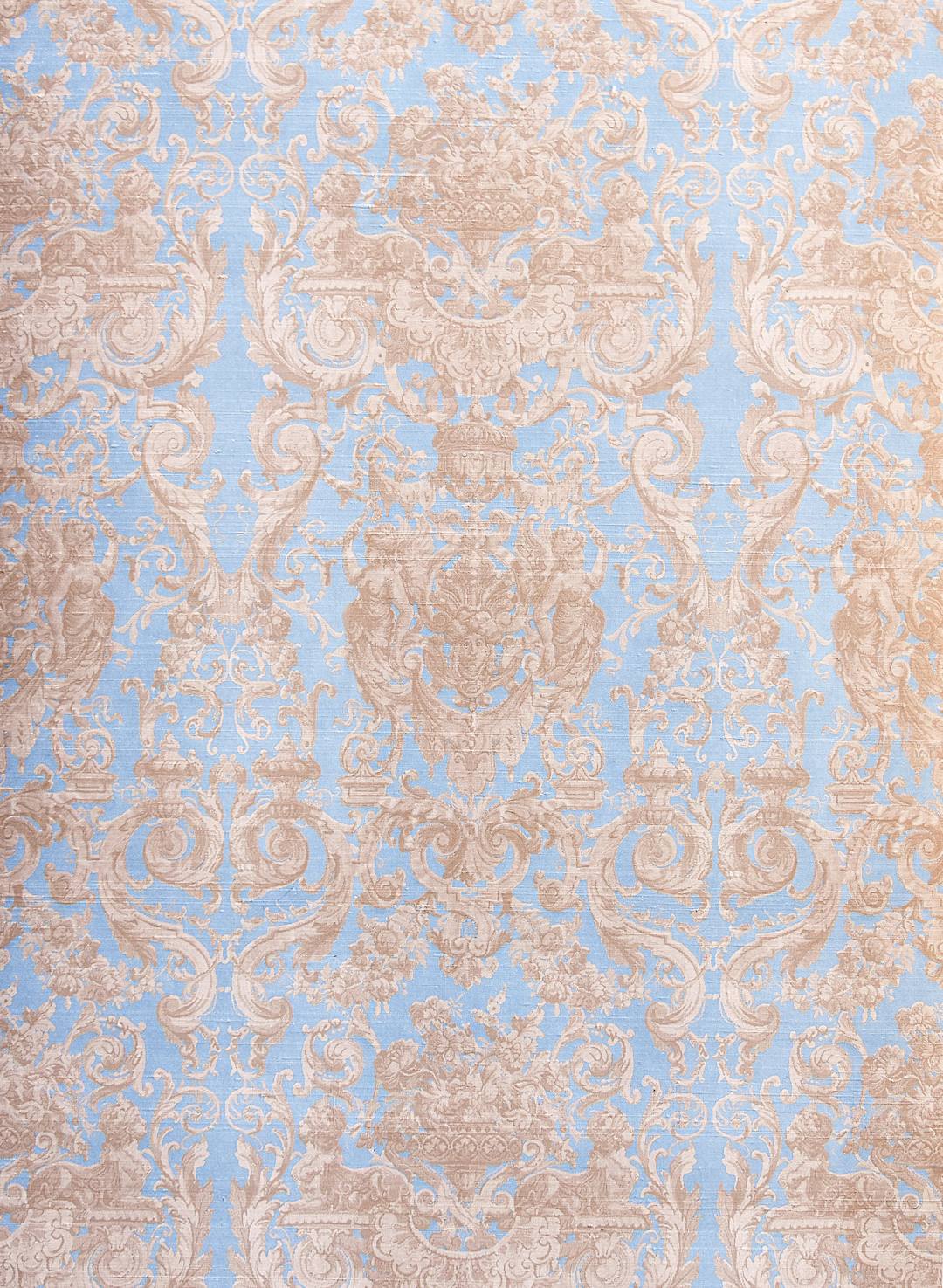
Grottesche Wallpaper – Rezzonico
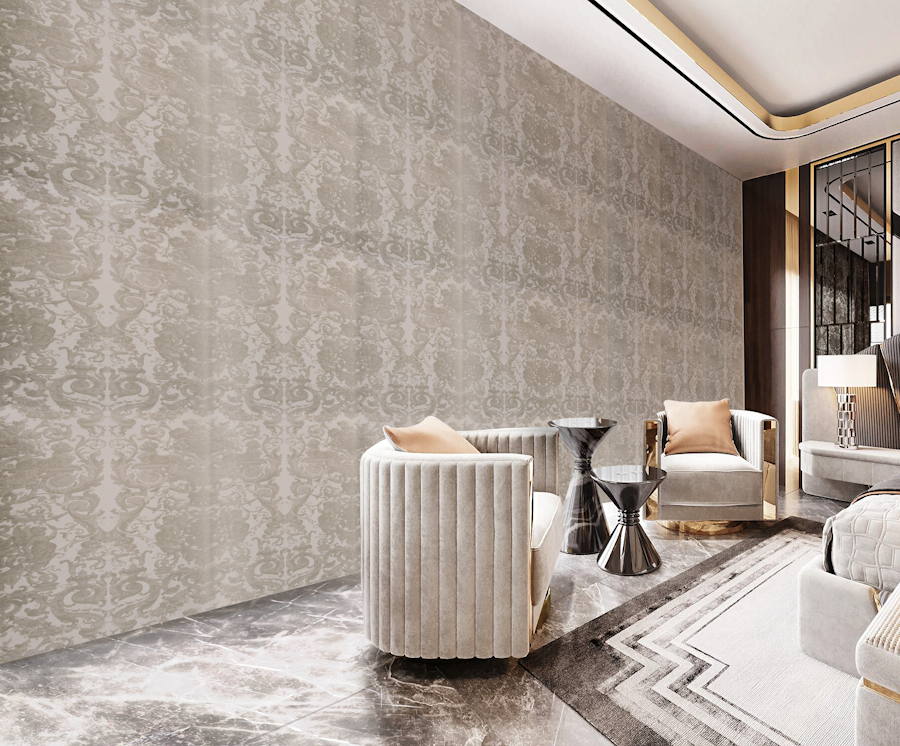
Grottesche Wallpaper – Grimani
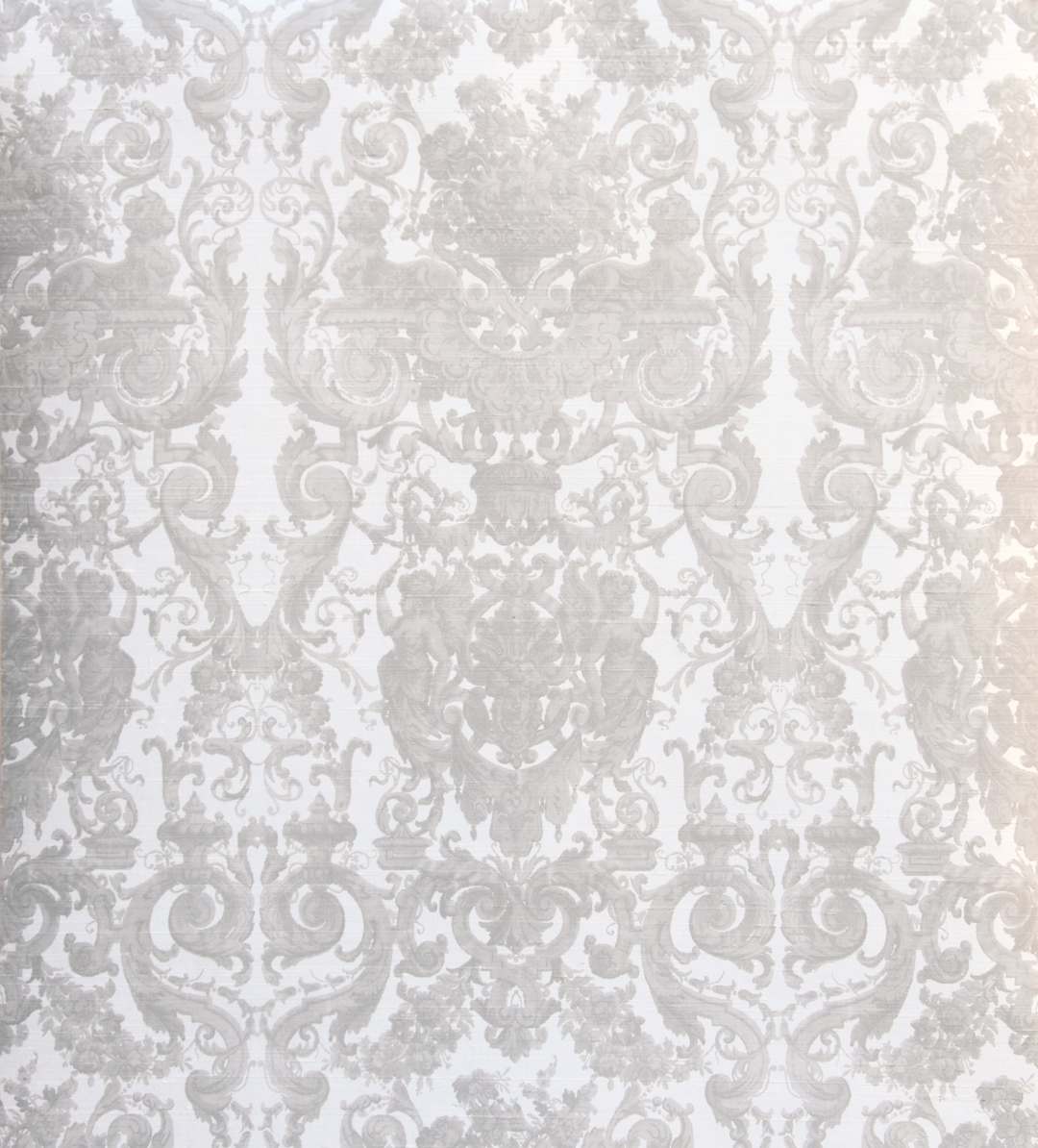
Grottesche Wallpaper – Grimani
Cover Photo: Grottesche velvet in Red