Since 1875, we have been weaving furnishing and haute couture fabrics in Venice, preserving a craft passed down from hand to hand, generation after generation. Some of our velvets are still woven entirely by hand on original 18th-century looms, rare and extraordinary instruments that continue to bring unique creations to life today, just as they did centuries ago. Every design, every fiber, every weave tells the story of a city built on water, its palaces, its colors, and its enduring devotion to beauty.
In this article, we invite you to discover the world of luxury fabrics: their names, the qualities that make them truly one of a kind, and the fascinating historical roots that connect them to the splendor of the Serenissima. It is a journey through decorative motifs that have endured for centuries, refined textures, and extraordinary weaving techniques, where artisanal excellence meets the poetry of textiles.
Handmade Brocade
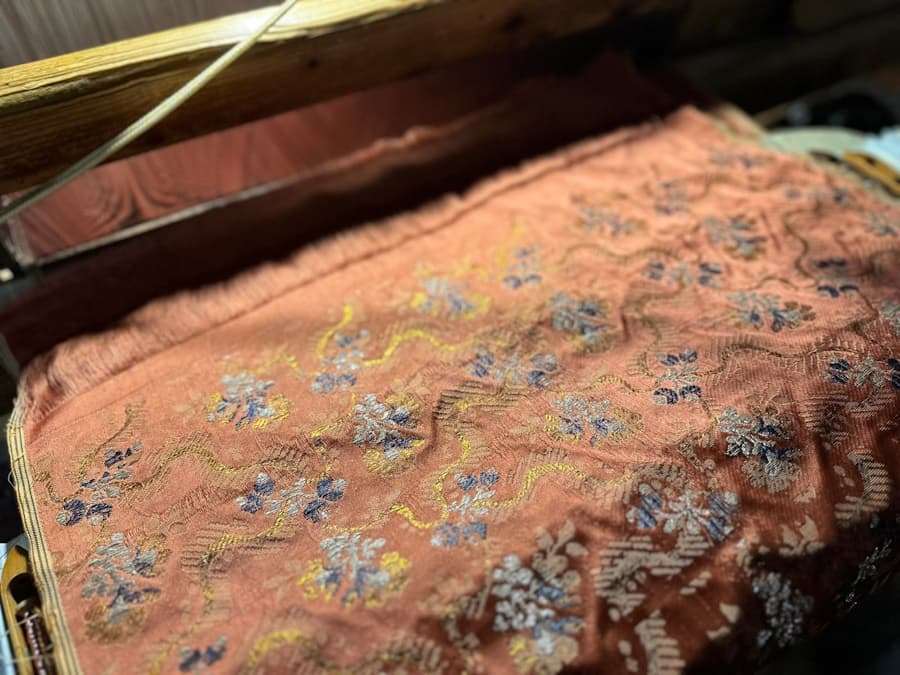
We have revived a textile art that was on the verge of disappearing: brocade, enriched with supplementary wefts of gold, silver, and silk that create delicately raised decorative motifs. Every inch is the result of a slow and meticulous process, carried out entirely by hand on our historic looms. The weaving is performed from the reverse side of the fabric, with nothing but a mirror to guide the artisan’s hands.
The remarkable complexity of this technique, yielding only about four inches of fabric per day, makes brocade one of the rarest textiles we produce. It is preserved and passed down with the same care devoted to our soprarizzo velvet. The result is a luminous textile, as precious as a jewel, capable of enriching both haute couture and interior design with a timeless beauty deeply rooted in the history of Venice.
Velvet
Rich, soft, vibrant, velvet is one of the most iconic and fascinating fabrics of all time. Its origins go back to the ancient Orient, but it was in Venice, between the 15th and 17th centuries, that it found its greatest expression, becoming one of the symbols of luxury in the Serenissima. At that time, it was reserved for the nobility, doges, and high ecclesiastical offices, decorating sumptuous clothes and furnishings.
Its secret lies in the workmanship that creates the typical thick, velvety, iridescent pile: a surface that caresses the light and refracts its hues. Today, we create our velvets in a variety of materials – silk, cotton, viscose, polyester – to meet every need, from interior design to fashion, while preserving the charm of this noble fabric.
Handmade Velvet
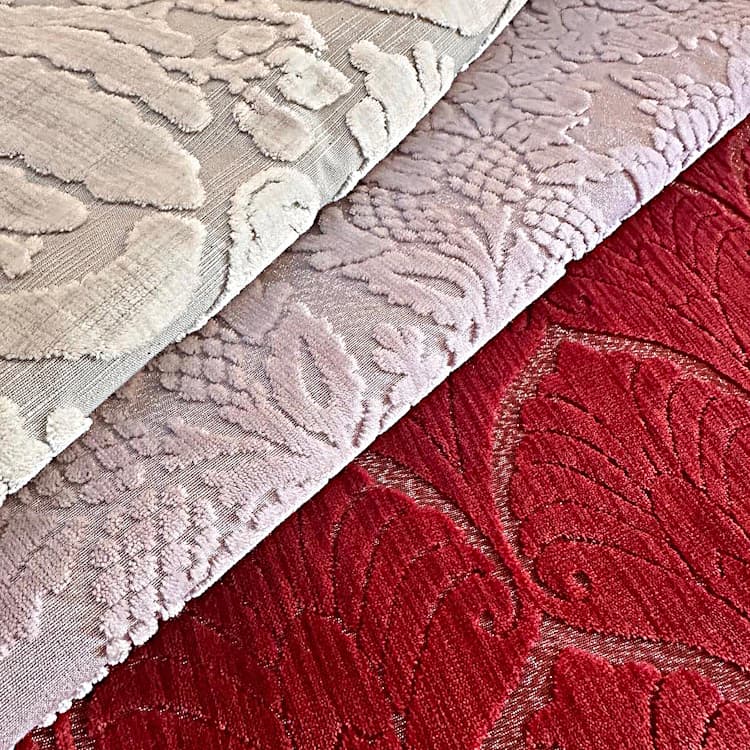
We cherish and pass on a rare knowledge: that of working velvet by hand on historic 18th century looms. Each meter is the result of hours of work, absolute precision, and a skill that few artisans in the world possess today.
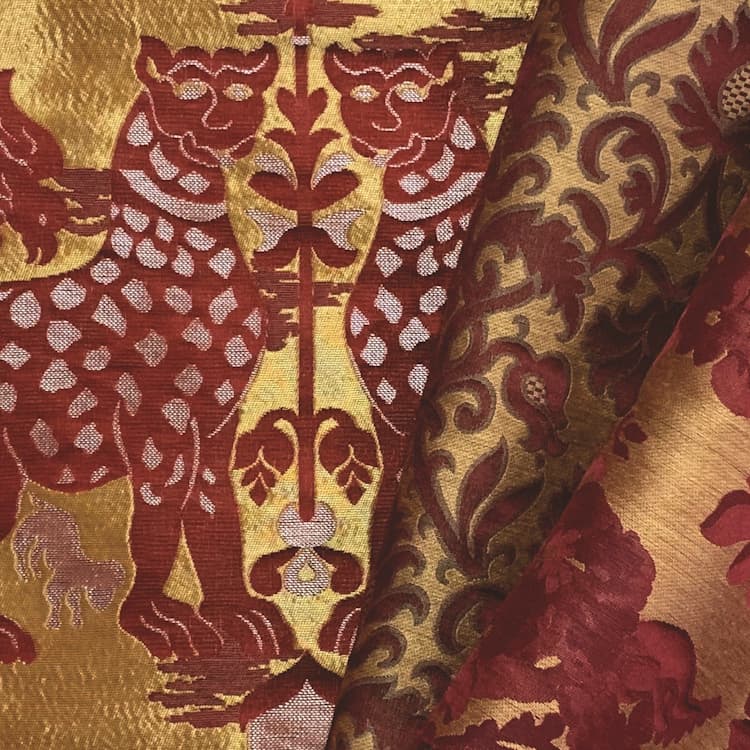
The finest of these is the soprarizzo or cesellato velvet: a textile masterpiece that alternates cut velvet and curly velvet, creating effects of light and shadow that give depth and three-dimensionality to the design. Every detail is the result of an ancient technique that we still carry out strictly by hand. The result is a unique, unrepeatable fabric as precious as a jewel.
Animalier Velvet
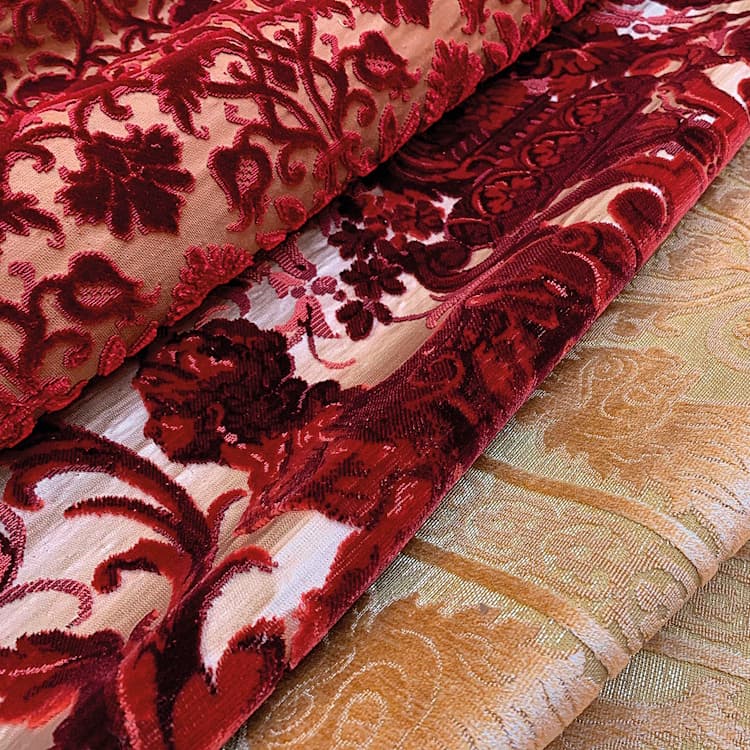
Bold, sophisticated, timeless. Animalier velvet is a celebration of nature interpreted with imagination and style. Its origins go back to decorative motifs known in the past as Zoote, symbols of strength and prestige.
In the 18th century, animalier patterns became extraordinarily popular in Europe. Today, with our collection, we renew them with contemporary palettes and striking color combinations, while keeping their original spirit intact. They are ideal fabrics for those who want to express their style with personality and refinement, both in the home and the wardrobe.
Multicolored Velvet
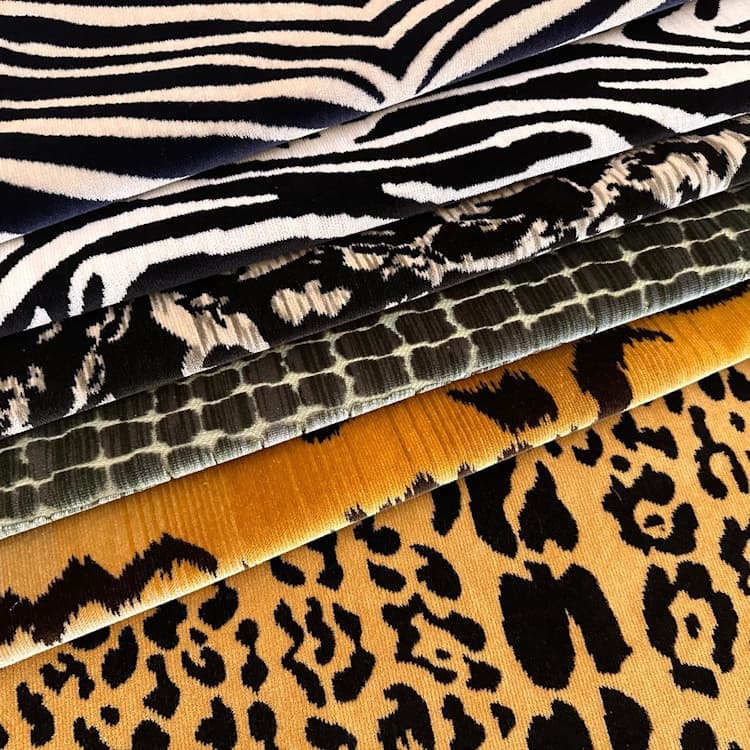
Our multicolored velvets, fabrics of rare beauty and incredible decorative richness, are the result of extremely complex workmanship. The polychrome designs are characterized by the harmony with which shapes and colors are juxtaposed, creating vibrant compositions that stand out elegantly against neutral backgrounds. Every detail is the result of great craftsmanship, resulting in complex and perfectly defined patterns.
Among the most famous are the “Jardinière”- garden velvets, decorated with exquisite floral motifs inspired by nature, which were most popular at European courts in the 17th century. Today, these luxury fabrics are still chosen to furnish exclusive interiors and for creations that require a touch of elegance, poetry, and visual refinement, striking a perfect balance between historical memory and contemporary sensibility.
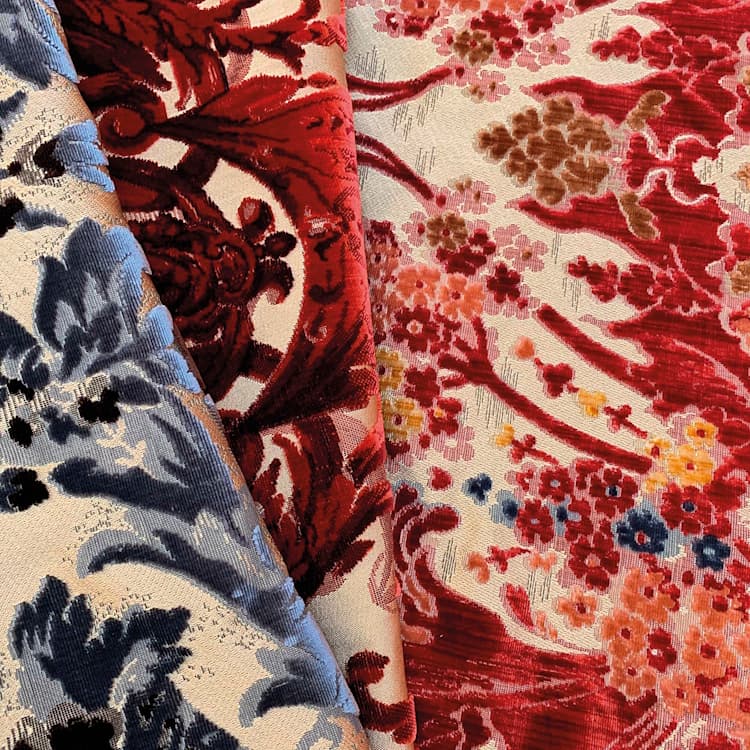
Heddle Velvet
The name of this velvet derives from the processing that requires special rods to produce its typical pile, allowing the creation of a wide range of decorative patterns using multiple colors. Whether used for luxury clothing or to embellish interiors, heddle velvet is an extraordinarily charming and versatile fabric with a touch of elegance and originality that does not go unnoticed.
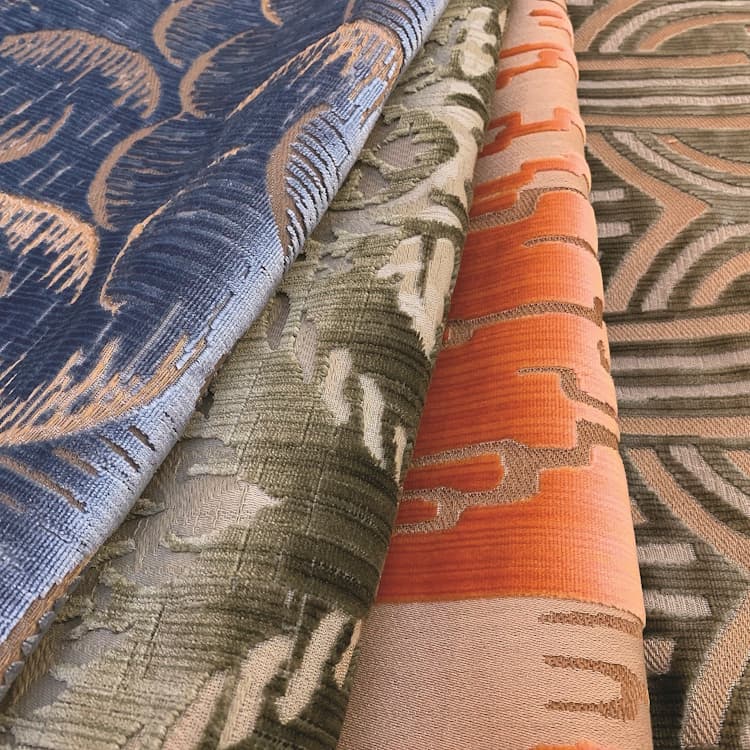
Damask
Damask is a beautifully light, silky, textured fabric with an iridescent luminosity. The patterns are richly detailed and shine against the matte background or vice versa as light reflects off the yarn. The pattern is visible on both the front and back, but the shiny and matte parts are opposite, as in the negative of a photograph; nevertheless, they are not reversible fabrics.
Originating in China, it spread along the Silk Roads to the Syrian city of Damascus, which gave it its name and fame. Used for centuries in aristocratic settings and churches, it is often embellished with metallic threads and fine decorations. Today we offer it in versions that combine historical fidelity and contemporary taste.
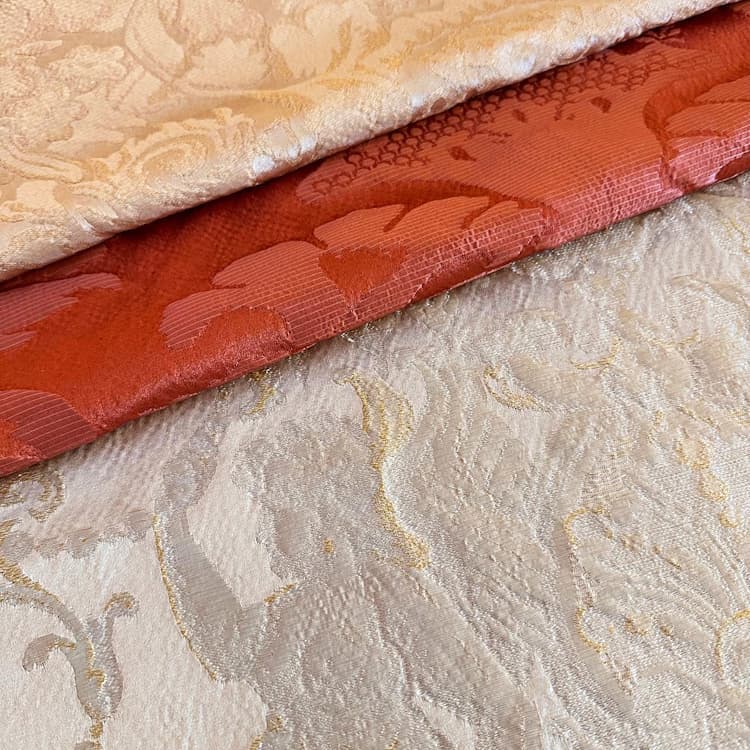
Lampas
Lampas is a precious woven fabric with ancient oriental origins. Its complex warp and weft structure allows for large, three-dimensional patterns that stand out from the background. Often embellished with gold or silver threads, it became fashionable during the Renaissance and the Baroque period. In the second half of the 1500s, it became the fabric of choice for clothing, but today it is used in furniture (upholstery, curtains, luxury tapestries) and ecclesiastical vestments.
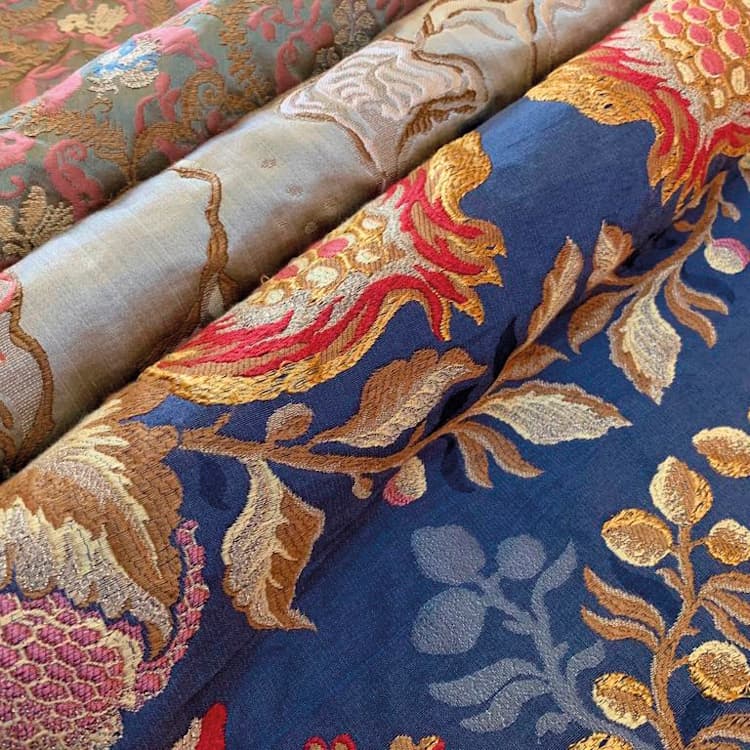
Brocatelle
Brocatelle is a fine fabric with elaborate raised designs. It is characterized by the juxtaposition of stiff wefts, usually made of hemp or linen, and lighter silk warps. This combination creates a textile surface with three-dimensional decorative patterns, giving the brocatelle a unique elegance.
Lighter than brocade, brocatelle established itself as a luxury upholstery fabric in the 16th century. Able to combine classicism and elegance, it is still chosen today for exquisite furnishings, upholstery, and ecclesiastical vestments.
Satin
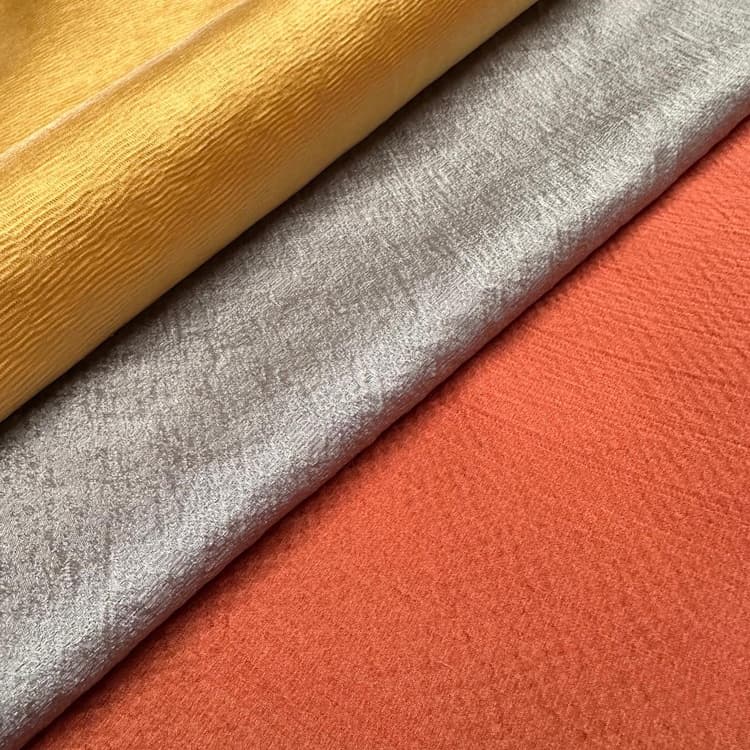
This is a fine silk fabric with extreme luster and an incredibly smooth and light feel. What makes it so shiny and uniform is its weave – the way the warp threads intertwine with the weft threads – which is also used to make textured fabrics such as damask and lampas. Satin has no pattern and its reverse side is opaque.
Originally from China, satin made its mark in Italy in the Middle Ages and was favored by the European nobility. Louis XIV made it the star of the sumptuous interiors of the Palace of Versailles. Even today, our satin is prized for ceremonial gowns, interior decorations, and custom designs where every detail must speak of perfection.
Cover Photo: Filippo Guerra - Studio Otium.