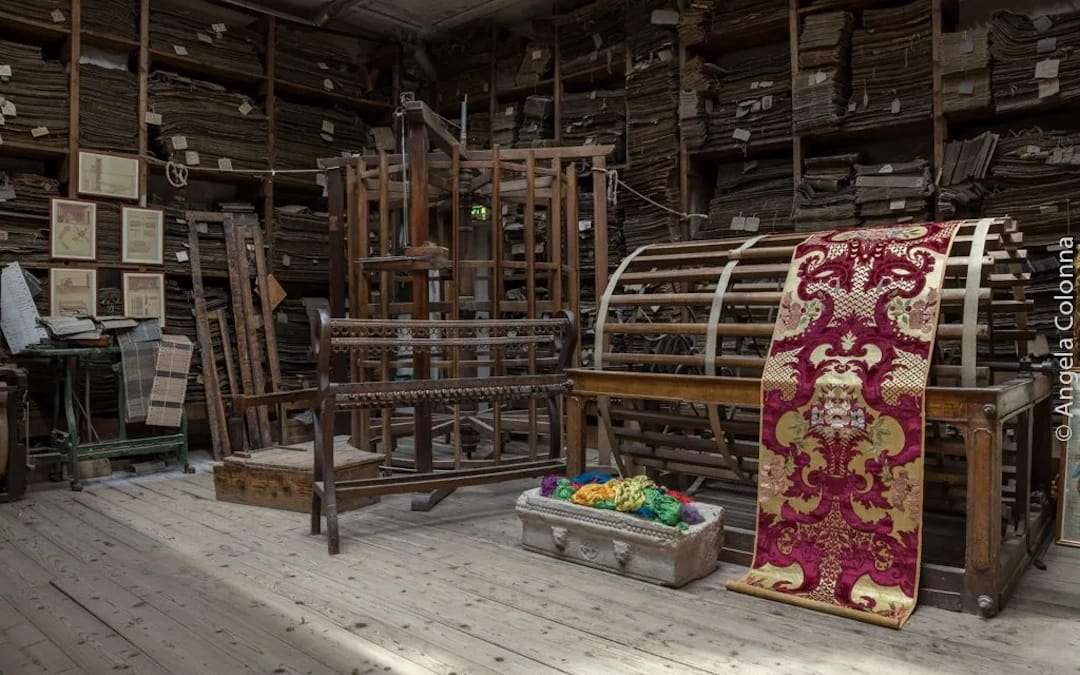
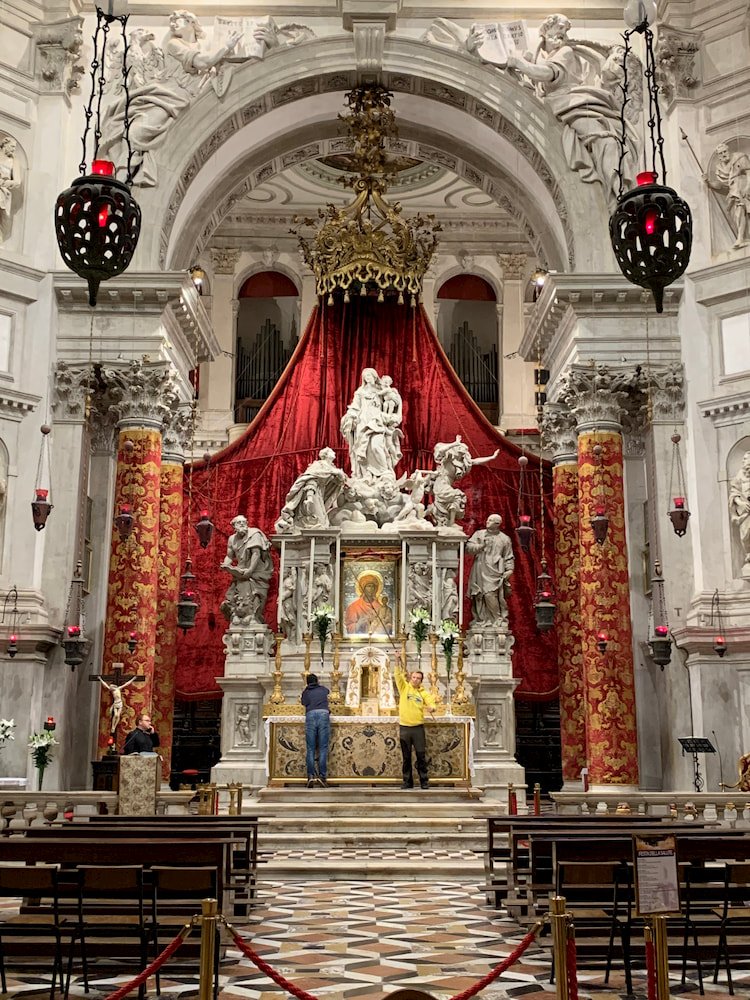
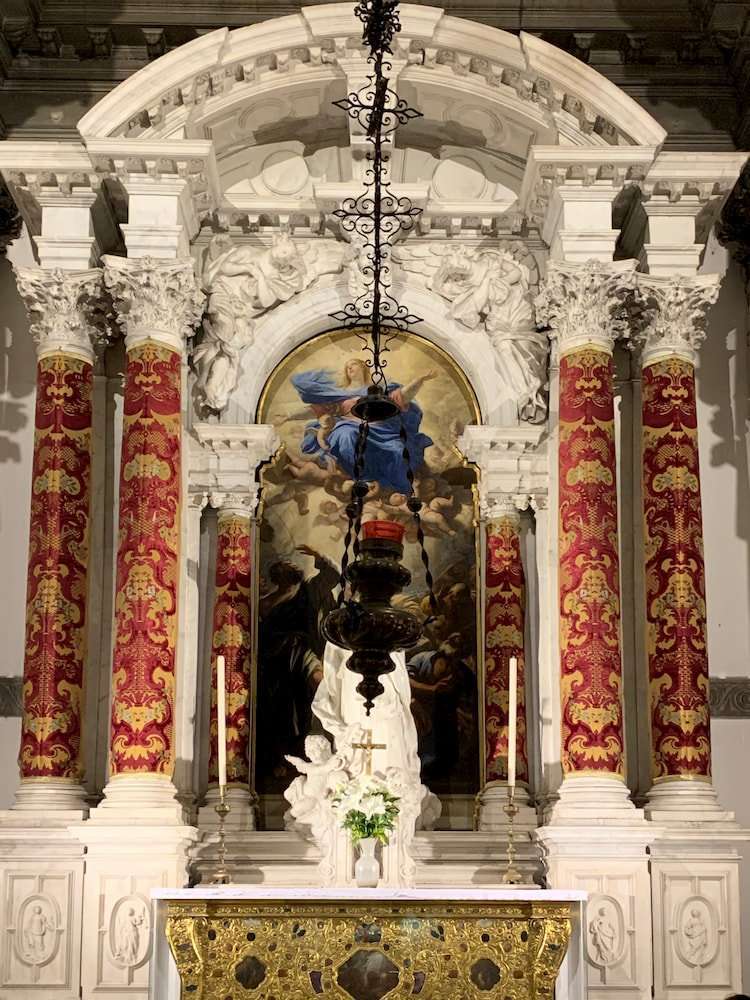
On November 21st, when Venice celebrates one of its most heartfelt traditions, the Feast of Our Lady of Health, the city gathers in quiet devotion. It’s a ritual that belongs not only to history, but to the very heartbeat of Venice, echoing through its stones, its waters, and its slow, ancient breath. As every year, inside the Basilica dedicated to the Virgin, our “Colonne” velvet will shine once again, an exquisite soprarizzo that interweaves memory, devotion, and art.
Let’s retrace its story and listen to the voices of one of the weavers who crafted it, thread by thread, between the 1950s and 1960s.
The Feast of Our Lady of Health
In 1630, when the plague darkened Venice, the government of the Serenissima asked the people for an act of faith: a continuous three-day, three-night procession to implore the Virgin’s protection. At the end of this painful pilgrimage, the Doge vowed to build a church dedicated to Health—Salute.
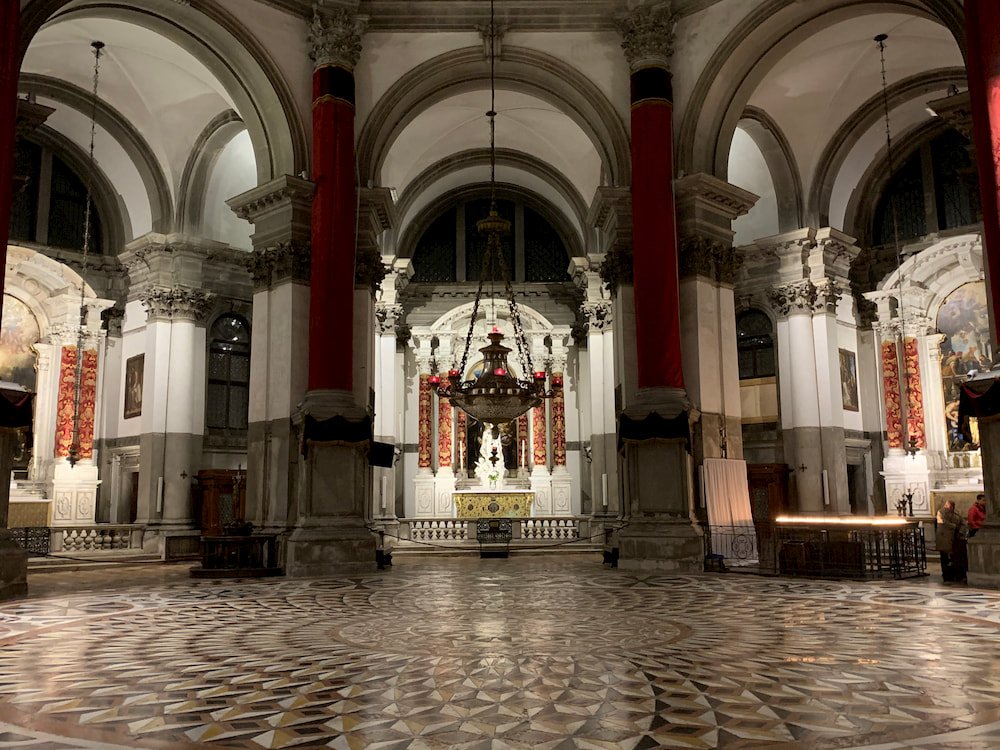
A few weeks later, the epidemic slowed, then vanished. And so, Venice kept its promise: it raised the magnificent Basilica of Santa Maria della Salute at the Punta della Dogana, and established an annual procession of thanksgiving. Since then, every November 21st, a silent river of Venetians and many pilgrims climb toward the Basilica to renew this centuries-old tradition, carrying ancient prayers, lit candles, and new hopes.
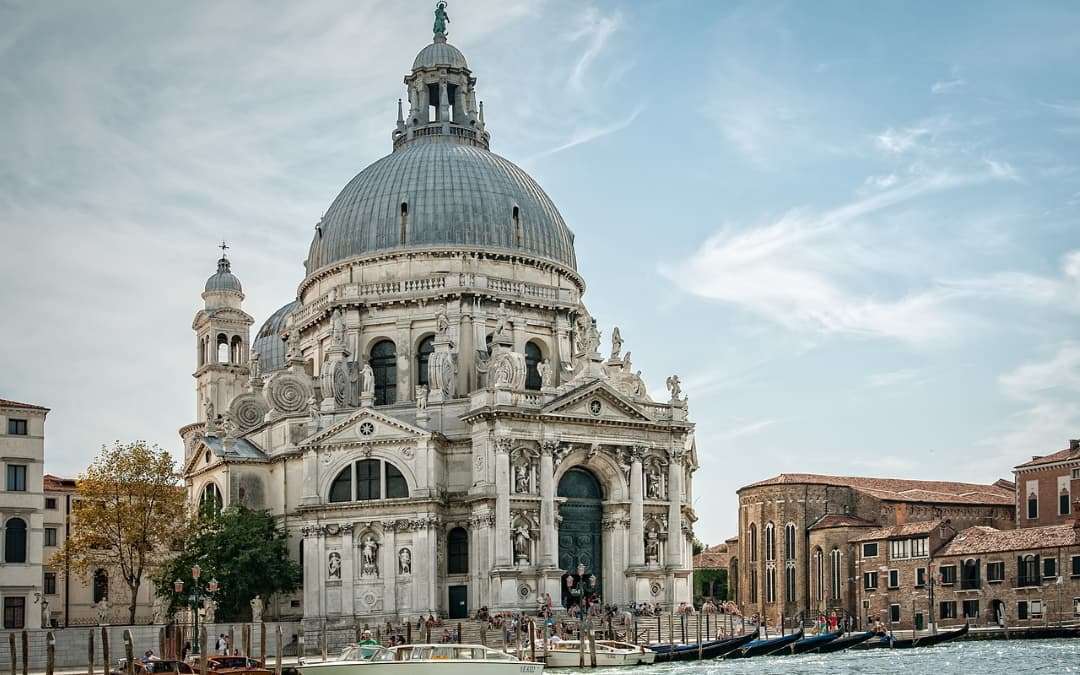
Basilica della Salute – Venice
The Soprarizzo for the Basilica: a Garden Woven in Gold
Venice wanted a spectacular temple, an artwork that would celebrate both Mary and the Serenissima. And so, at the Punta della Dogana between the Basin of San Marco and the Grand Canal, an imposing and harmonious Baroque masterpiece with an octagonal plan arose.
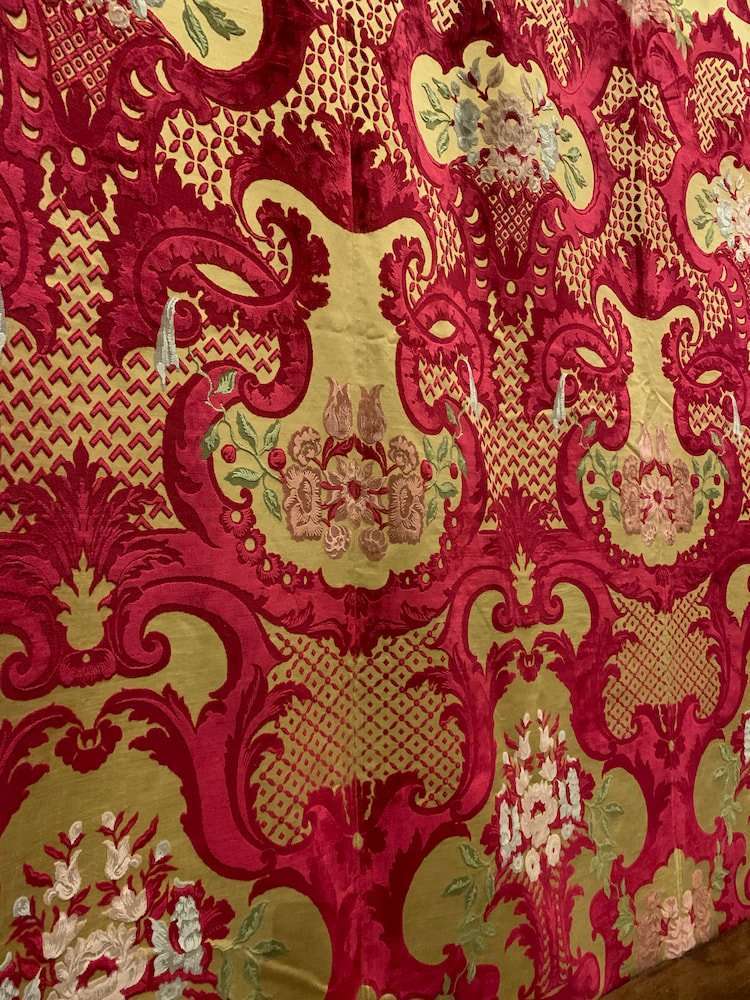
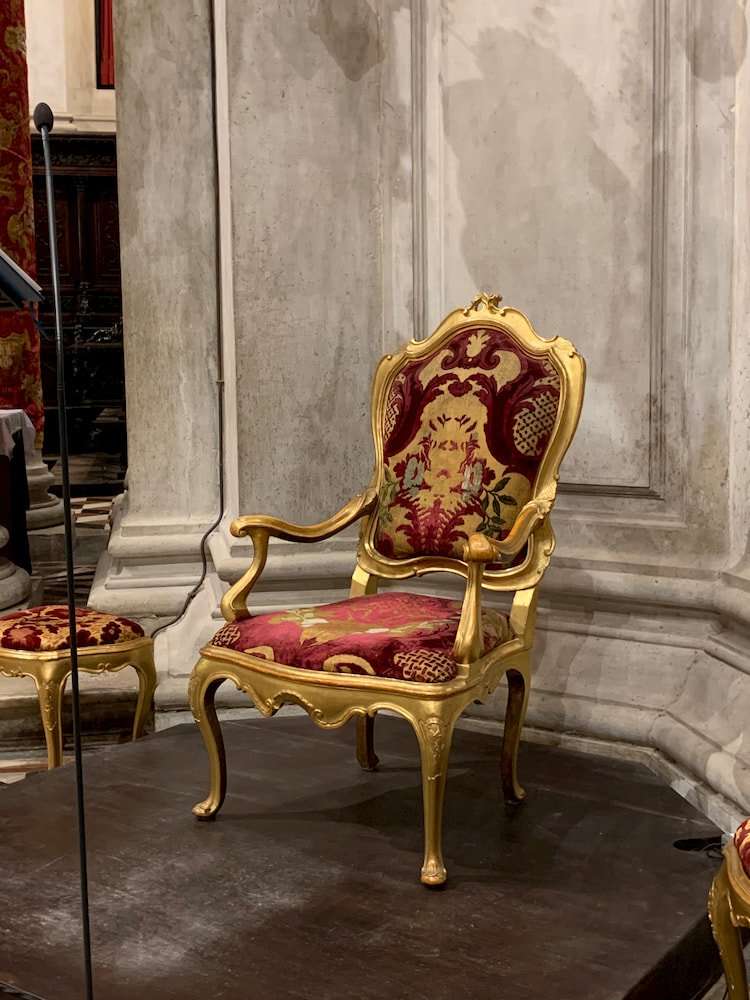
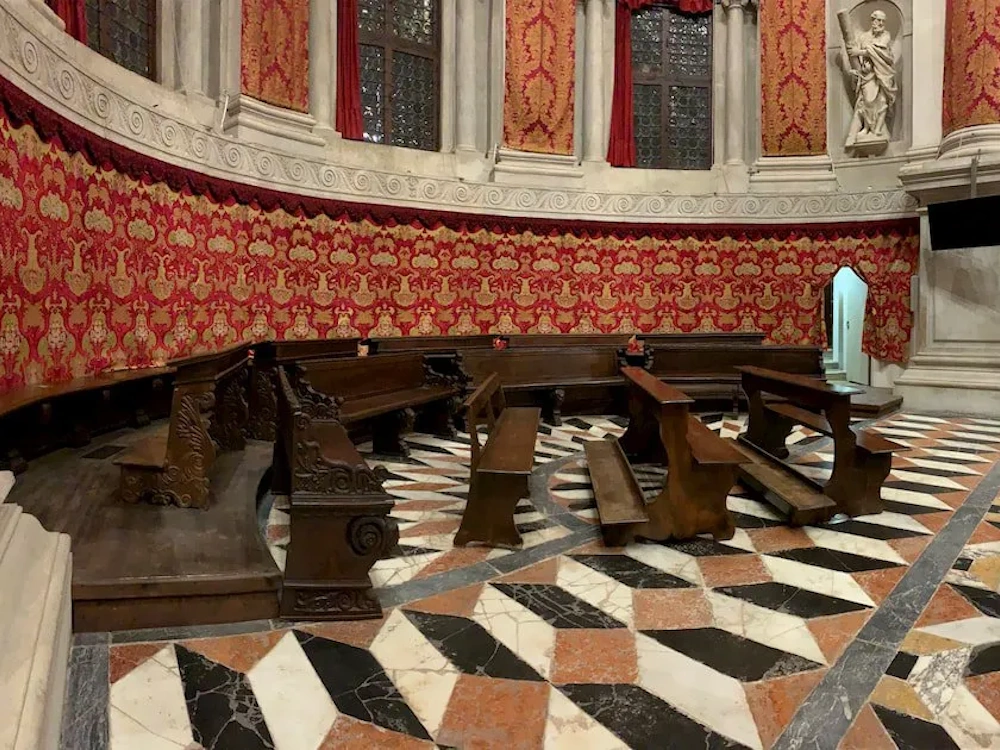
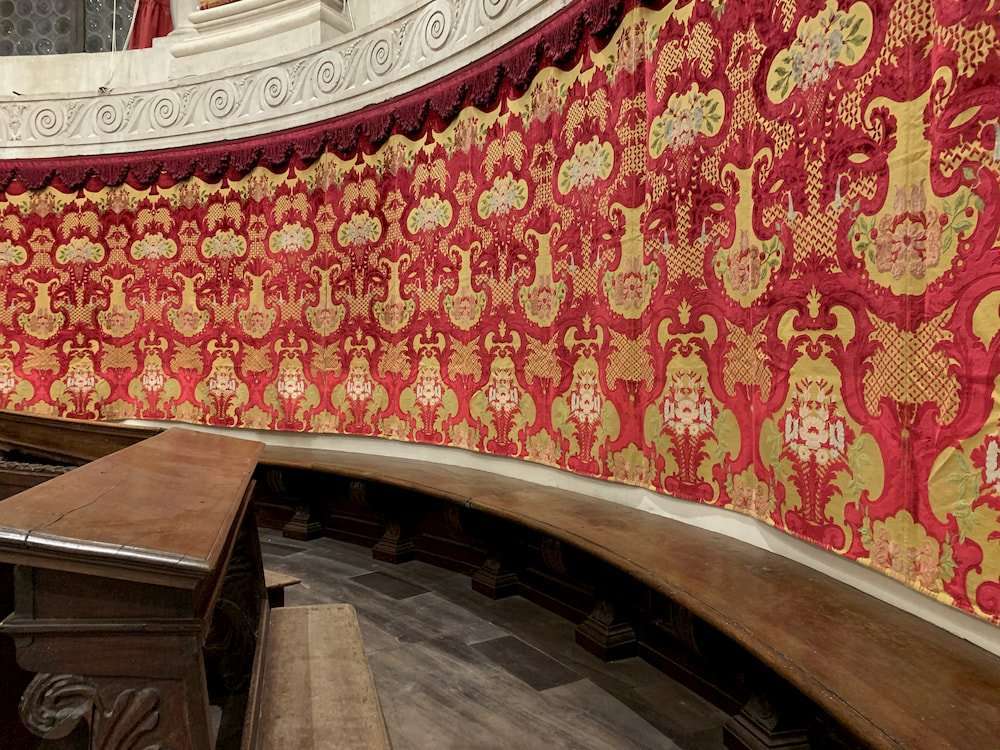
In the 1960s, our weaving factory contributed to its beauty with a hand-woven soprarizzo velvet: Colonne. Still today, it wraps the Basilica’s marble columns during the feast days, preserved in its freshness, as if time hesitated to touch it.
Its golden-yellow ground features an interplay of deep reds and vibrant hues: architectural motifs, berries, grapes, buds, and a garden of flowers. Tulips, daffodils, roses, and peonies seem to bloom across a garden of light, enriched with genuine gold threads. The design is sumptuous, intricate, evoking the furnishing fabrics of the early 18th century.
A design full of details and tones, clearly visible even in the photos of the pattern laid out on graph paper.
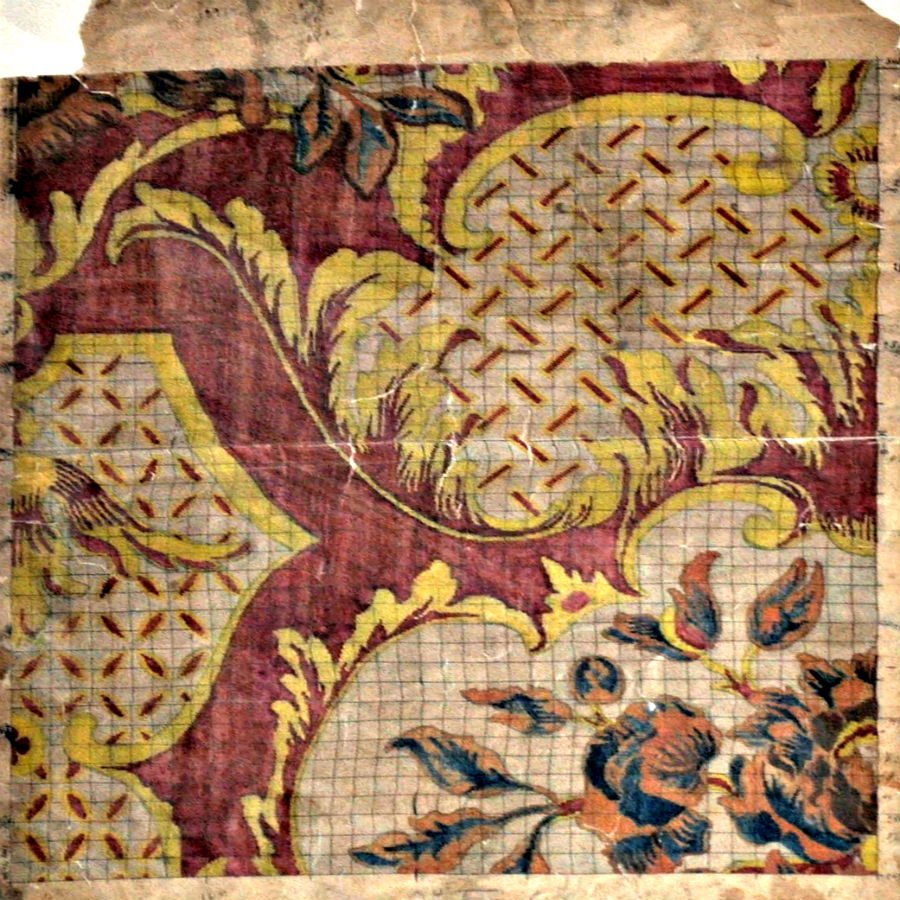
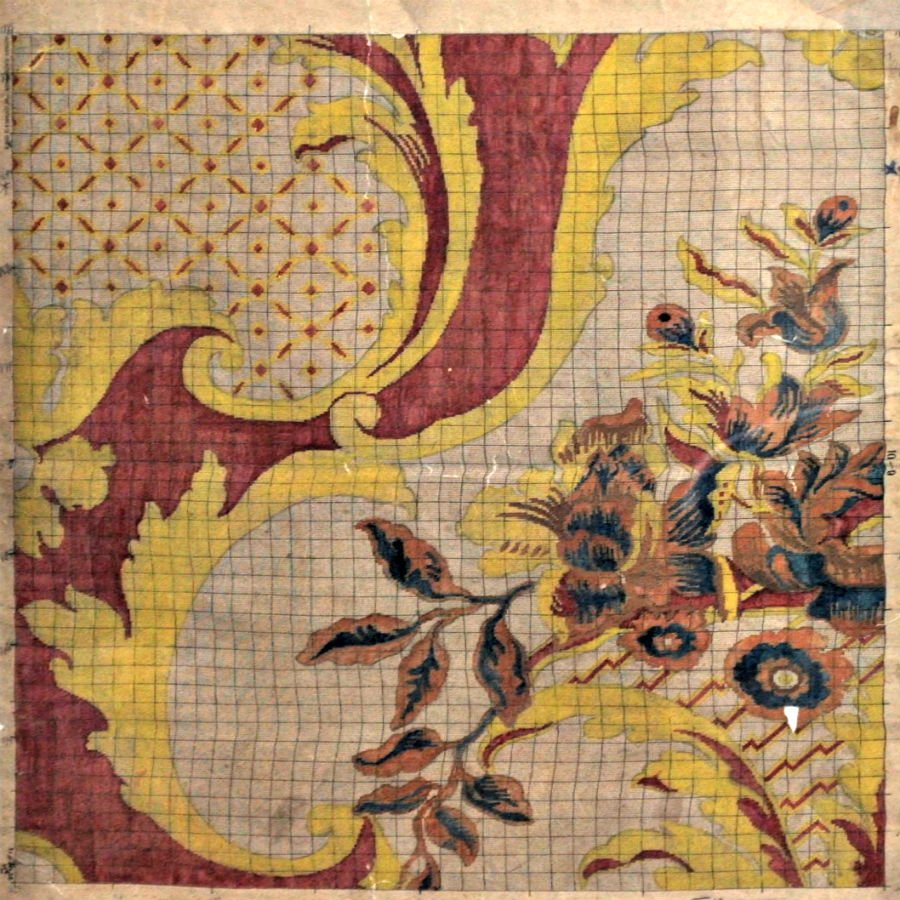
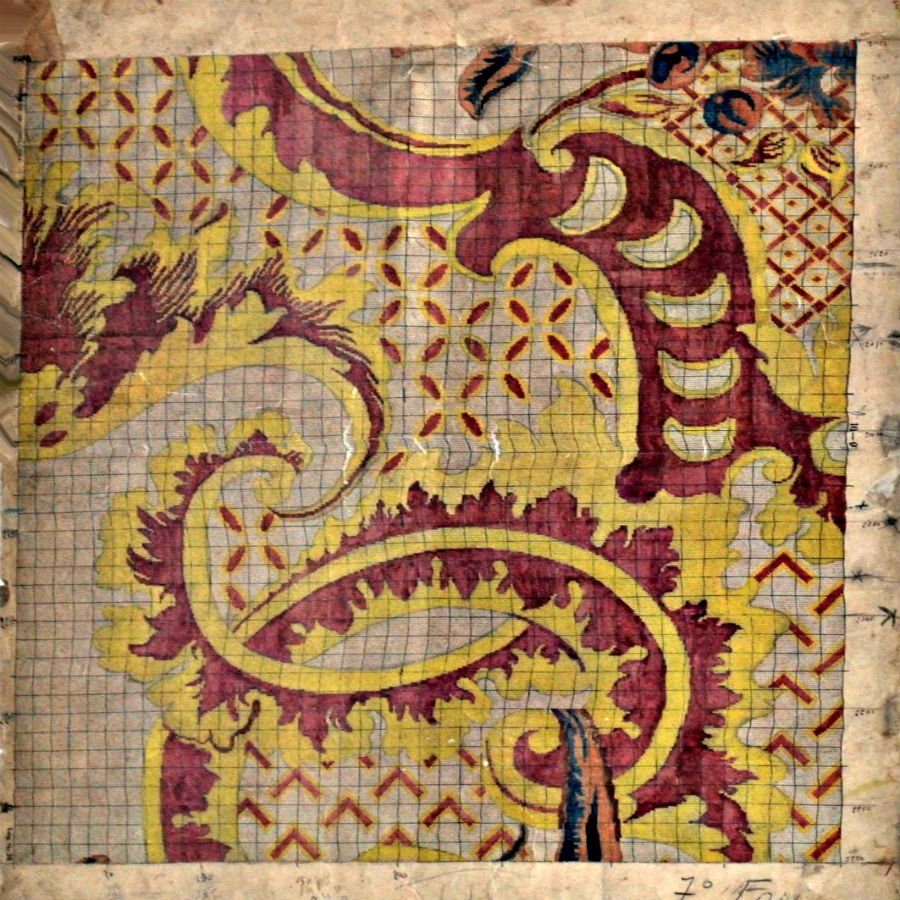
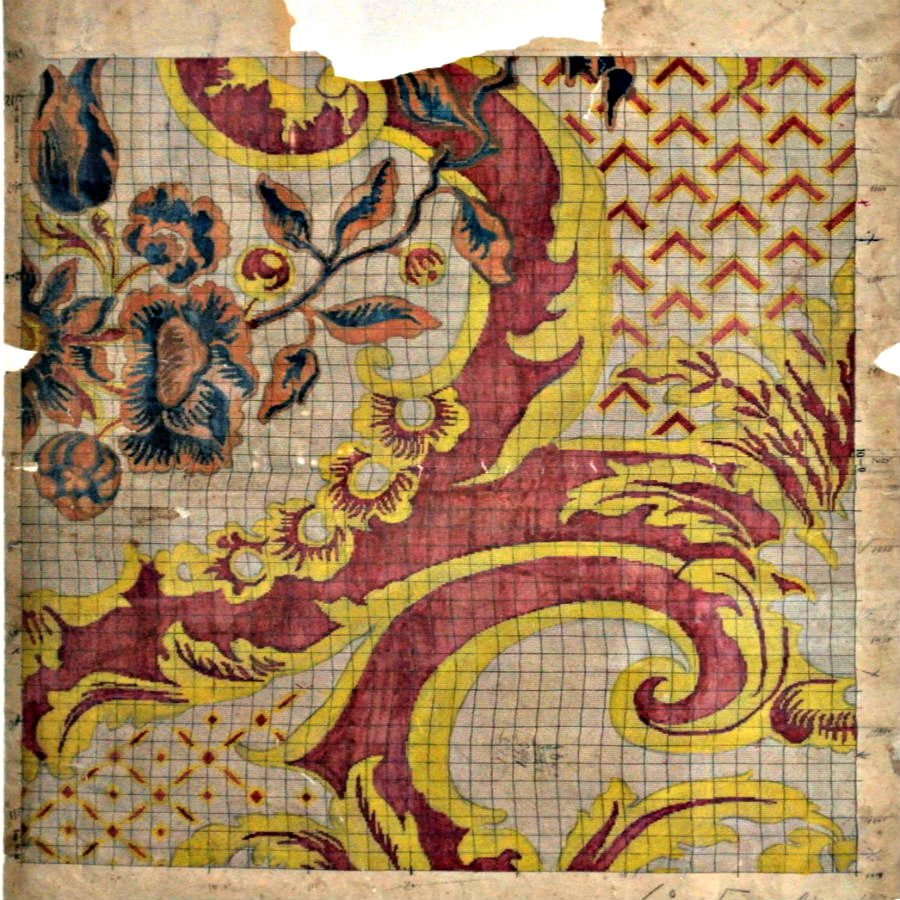
Velluto Colonne drawing on graph paper – Image Gallery
It is one of the most complex textiles our Tessitura has ever produced: weaving it on Jacquard looms required 8,000 punched cards, each containing information for the motif.
Even the pattern repeat is exceptional: 4 meters, meaning that each individual motif reaches four meters in height, enough to wrap an entire column. A technical miracle, even before it is an aesthetic one.
The Creation of the Soprarizzo Colonne Described by a Weaver
The Colonne velvet holds a special meaning for us: it speaks of the city where we have been working for centuries, a city we love deeply.
Its creation required years of work, two looms, and many meters of fabric, enough to cover the columns of the main altar and the eight side chapels of the Basilica della Salute.
Between the 1950s and 1960s, when the soprarizzo Colonne was born, Bevilacqua’s weaving factory employed 60 weavers, engaged in every phase of the craft: from handling the iron tools to preparing the punched cards, producing by hand lampas, brocades, satins, damasks, and velvets.
Today, there are four, primarily dedicated to soprarizzo velvets.
Mariella Bearzi, who worked at the Bevilacqua mill from age 12 to 67 and personally contributed to the creation of this velvet, tells us about those years:
“…I still enter the Basilica every year during the Feast days. There must surely be a piece of the velvet I made on those columns. …The most complicated fabric to produce was the soprarizzo. It required strenght, but above all, knowledge, because we handled everything ourselves. It was a job I loved deeply, just as I loved the fabrics we created. And I think they should never pass into oblivion.”
THE STORY OF A PRECIOUS FABRIC
The soprarizzo Colonne was commissioned by the then Patriarch of Venice, Monsignor Angelo Roncalli, who shortly after would ascend to the papacy as Pope John XXIII.
A photograph shows him visiting our weaving factory as he observes the velvet destined for the Basilica of the Salute, accompanied by Cesare and Giulio Bevilacqua, respectively the grandfather and father of the current owners, and by many weavers, including Mariella Bearzi herself.
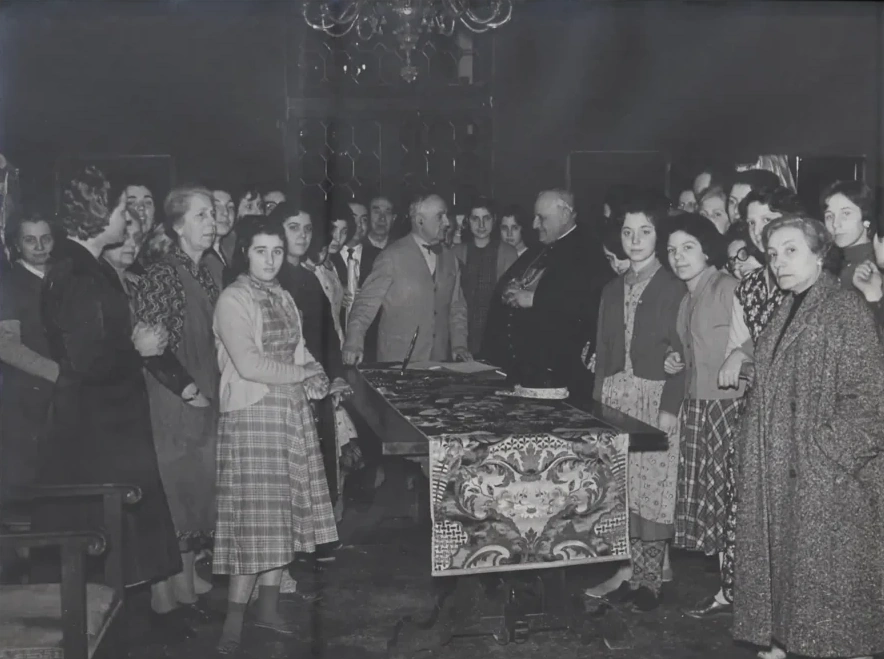
The “Colonne” velvet being shown to Cardinal Roncalli, Patriarch of Venice – 1957
The velvet faithfully recreated the ancient textile that had adorned the Basilica’s columns for centuries.
The complexity of its workmanship, its design, materials, and history make it a soprarizzo of extraordinary value, one to be preserved with the utmost care. Today, just as then, it is displayed only on the most sacred days, both to protect it and to offer it to the eyes of Venetians and pilgrims alike.
Colonne Velvet on Social Media
Cover Photo by Angela Colonna